Summary from Goodreads:
An inspiring story of how a Mormon kid with Tourette's found salvation in books and weight-lifting.
Josh Hanagarne couldn't be invisible if he tried. Although he wouldn't officially be diagnosed with Tourette Syndrome until his freshman year of high school, Josh was six years old and onstage in a school Thanksgiving play when he first began exhibiting symptoms. By the time he was twenty, the young Mormon had reached his towering adult height of 6'7" when — while serving on a mission for the Church of Latter Day Saints — his Tourette's tics escalated to nightmarish levels.
Determined to conquer his affliction, Josh underwent everything from quack remedies to lethargy-inducing drug regimes to Botox injections that paralyzed his vocal cords and left him voiceless for three years. Undeterred, Josh persevered to marry and earn a degree in Library Science. At last, an eccentric, autistic strongman — and former Air Force Tech Sergeant and guard at an Iraqi prison — taught Josh how to "throttle" his tics into submission through strength-training.
Today, Josh is a librarian in the main branch of Salt Lake City's public library and founder of a popular blog about books and weight lifting—and the proud father of four-year-old Max, who has already started to show his own symptoms of Tourette's.
The World's Strongest Librarian illuminates the mysteries of this little-understood disorder, as well as the very different worlds of strongman training and modern libraries. With humor and candor, this unlikely hero traces his journey to overcome his disability — and navigate his wavering Mormon faith — to find love and create a life worth living.
The World's Strongest Librarian caught my eye because a) memoir of books and reading and b) it was on the Discover shelf at the store. And, well, c) it is also a memoir of faith. So lots of interesting things to mull over while reading.
It seems wrong to say this was a very fun book to read - particularly since some of the chapters about his treatment and crisis of faith are so serious - but it was a fun book. Hanagarne has a great voice - very matter-of-fact, straightforward, and cheeky without being too self-deprecating. He's had a very interesting journey both with his Tourette's and within in his faith (this is a good book to contrast with the LDS-is-terrible books; Hanagarne is maybe questioning aspects of his faith but it is clear that he had a good experience within the church). I wish he had dwelt a bit more on his librarian days but those are much more recent - LOVED how he opened each chapter with a Dewey Decimal heading (a real one or three) that noted what subjects were going down in that chapter.
PS: Hanagarne occasionally writes for Book Riot!
26 June 2013
25 June 2013
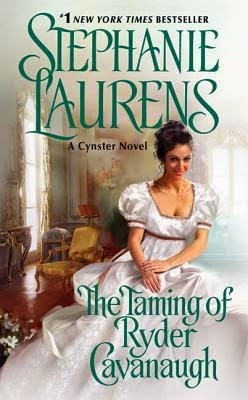
The Taming of Ryder Cavanaugh (Cynster Sisters Duo #2, Cynster #20)
Summary from Goodreads:
The 2nd in the Cynster Sisters duo, #1 New York Times bestselling author Stephanie Laurens thrills with this fantastic tale of a Cynster who'll stop at nothing for love.
Lady Mary has been waiting years for this opportunity. Not that her sister has thrown off her spinster ways and become betrothed, it's finally Mary's chance for true love. She knows exactly who she wants --and it's not someone as wild, unmanageable, and sinfully seductive as Ryder Cavanaugh.
Ryder Cavanaugh, Marquess of Raventhorne, had never met a woman who wouldn't happily fall at his feet--or into his bed...until Lady Mary Cynster. But Ryder has made some decisions about his life and he'll only succeed at being the man he wants to be with Mary by his side. And convincing her of that fact is just the kind of challenge he thrills at...
Miss Mary Cynster – the last, unmarried Cynster female of her generation – is on the hunt for her hero. The coveted necklace has at last been passed to her and she is certain she’s found a suitable candidate: Lord Randolph Cavanaugh, half-brother to the rakish, dangerous Marquess of Raventhorne. Rand is twenty-four, well-off, handsome, and eminently suitable. If only Ryder didn’t constantly stand in her way.
Ryder Cavanaugh, Marquess of Raventhorne, overhears Mary muttering to herself about heroes and Rand at Henrietta’s engagement ball. He immediately realizes Mary has set her matrimonial sights on Rand – and that the strong-willed miss will eat the reluctant Rand alive. When Mary throws all Ryder’s polished flirtation back in his face when all other women would have melted at his feet, he is immediately intrigued. This woman has the backbone and background to make the perfect marchioness. Ryder hadn’t quite intended to enter the marriage market at this time, but as Mary pursues Rand – conveniently placing herself in Ryder’s vicinity every time – he decides that it is high time he bring Mary around to the idea of Ryder as a husband.
Fate forces both their hands. Ryder is stabbed by footpads one evening and rescued by Mary just as he loses consciousness. She remains with him through the night to nurse him as Ryder fights for his life – only to be trapped by the arrival of his haughty step-mother in the morning. Ryder quickly turns the tables on the Dowager Marchioness of Raventhorne by announcing his engagement to Mary, who wisely plays along. After consultation with Mary’s parents, it is decided that there is nothing else to be done. Mary and Ryder will marry - they are well-matched in family background and fortune and the grande-dames of the ton favor the pairing – and decide how their marriage will work.
This being a Stephanie Laurens novel, the road to the Happily Ever After is not without bumps and potholes. Someone wishes Ryder and Mary dead in typical Laurens fashion and she doesn’t disappoint – intrigue abounds. The penultimate scene is expertly constructed to allow Ryder to bare his manly, barbarian heart and do what few Laurens heroes do: cry. I loved every word and welled-up right along with the characters. I have a soft spot in my heart for Laurens’ heroes – they are big and tough and prowling and dead sexy as hell. Ryder has been endowed with leonine aspects of his own, the tawny, lion’s-mane of hair that women love to run their hands through, and that Mary quite appreciates.
A weird spot, though, occurred when Mary very pointedly asked Ryder to consummate their marriage ahead of the ceremony. She is refreshingly frank about acknowledging that all the Cynster women anticipated their vows…but the very grown-up Mary contrasted strangely with the three-year-old toddler Devil cradled in Devil’s Bride. It was as if I felt a little motherly toward her character. I was quite pleased with the way the scene was structured to give Mary agency as regards her own sexual experience but there was a little “my baby is all grown up”. The major pay-off in this novel comes in the Epilogue. I don’t want to spoil it for anyone but if this is truly the last Cynster novel Laurens ended her famous series on a wonderful note.
The 2nd in the Cynster Sisters duo, #1 New York Times bestselling author Stephanie Laurens thrills with this fantastic tale of a Cynster who'll stop at nothing for love.
Lady Mary has been waiting years for this opportunity. Not that her sister has thrown off her spinster ways and become betrothed, it's finally Mary's chance for true love. She knows exactly who she wants --and it's not someone as wild, unmanageable, and sinfully seductive as Ryder Cavanaugh.
Ryder Cavanaugh, Marquess of Raventhorne, had never met a woman who wouldn't happily fall at his feet--or into his bed...until Lady Mary Cynster. But Ryder has made some decisions about his life and he'll only succeed at being the man he wants to be with Mary by his side. And convincing her of that fact is just the kind of challenge he thrills at...
Miss Mary Cynster – the last, unmarried Cynster female of her generation – is on the hunt for her hero. The coveted necklace has at last been passed to her and she is certain she’s found a suitable candidate: Lord Randolph Cavanaugh, half-brother to the rakish, dangerous Marquess of Raventhorne. Rand is twenty-four, well-off, handsome, and eminently suitable. If only Ryder didn’t constantly stand in her way.
Ryder Cavanaugh, Marquess of Raventhorne, overhears Mary muttering to herself about heroes and Rand at Henrietta’s engagement ball. He immediately realizes Mary has set her matrimonial sights on Rand – and that the strong-willed miss will eat the reluctant Rand alive. When Mary throws all Ryder’s polished flirtation back in his face when all other women would have melted at his feet, he is immediately intrigued. This woman has the backbone and background to make the perfect marchioness. Ryder hadn’t quite intended to enter the marriage market at this time, but as Mary pursues Rand – conveniently placing herself in Ryder’s vicinity every time – he decides that it is high time he bring Mary around to the idea of Ryder as a husband.
Fate forces both their hands. Ryder is stabbed by footpads one evening and rescued by Mary just as he loses consciousness. She remains with him through the night to nurse him as Ryder fights for his life – only to be trapped by the arrival of his haughty step-mother in the morning. Ryder quickly turns the tables on the Dowager Marchioness of Raventhorne by announcing his engagement to Mary, who wisely plays along. After consultation with Mary’s parents, it is decided that there is nothing else to be done. Mary and Ryder will marry - they are well-matched in family background and fortune and the grande-dames of the ton favor the pairing – and decide how their marriage will work.
This being a Stephanie Laurens novel, the road to the Happily Ever After is not without bumps and potholes. Someone wishes Ryder and Mary dead in typical Laurens fashion and she doesn’t disappoint – intrigue abounds. The penultimate scene is expertly constructed to allow Ryder to bare his manly, barbarian heart and do what few Laurens heroes do: cry. I loved every word and welled-up right along with the characters. I have a soft spot in my heart for Laurens’ heroes – they are big and tough and prowling and dead sexy as hell. Ryder has been endowed with leonine aspects of his own, the tawny, lion’s-mane of hair that women love to run their hands through, and that Mary quite appreciates.
A weird spot, though, occurred when Mary very pointedly asked Ryder to consummate their marriage ahead of the ceremony. She is refreshingly frank about acknowledging that all the Cynster women anticipated their vows…but the very grown-up Mary contrasted strangely with the three-year-old toddler Devil cradled in Devil’s Bride. It was as if I felt a little motherly toward her character. I was quite pleased with the way the scene was structured to give Mary agency as regards her own sexual experience but there was a little “my baby is all grown up”. The major pay-off in this novel comes in the Epilogue. I don’t want to spoil it for anyone but if this is truly the last Cynster novel Laurens ended her famous series on a wonderful note.
23 June 2013
It Happened One Midnight (Pennyroyal Green #8)
Summary from Goodreads:
More than one beautiful woman’s hopes have been dashed on the rocky shoals of Jonathan Redmond’s heart. With his riveting good looks and Redmond wealth and power, the world is his oyster—until an ultimatum from his father and a chilling gypsy prophesy send him hurtling headlong toward a fate he’ll do anything to avoid: matrimony.
Intoxicating, elusive Thomasina de Ballesteros has the bloods of London at her feet. But none of them knows the real Tommy—the one with a shocking pedigree, a few too many secrets, and a healthy scorn for rakes like Jonathan.
She is everything Jonathan never wanted. But on one fateful midnight, he’s drawn into Tommy's world of risk, danger…and a desire he’d never dreamed possible. And suddenly he’s re-thinking everything...including the possibility that succumbing to prophesy might just mean surrendering to love.
In Like No Other Lover, the second book from Julie Anne Long’s Pennyroyal Green series, Jonathan Redmond receives a prophecy from a Gypsy: he will have ten children and break hearts. And he does – break hearts, that is, because no lady of the ton has yet enticed him into matrimony. Until the day his staid father issues an ultimatum: Jonathan will receive no more monetary assistance from him, nor investments, unless he marries. Marries appropriately, that is, since Lyon is still missing and Miles married the unsuitable Cynthia. Jonathan is now cash-poor and desperate to prove himself to his father.
Thomasina de Ballesteros – Tommy to everyone – is the mysterious beauty who has captivated the rakes of the ton. Tommy, however, has no use for any of them. Unless they can provide her with access the Duke of Greyfolk, possibly, but her reasons for that need are her own. When Jonathan catches her spying through Greyfolk’s window the two exchange barbs then part. They don’t need one another. Fate keeps throwing them together. Tommy needs to turn a quick profit and Jonathan needs capital to invest in a four-color printing press. A daring nighttime excursion to rescue an enslaved child and a shady mill operation keep Jonathan and Tommy working together, but external forces (parents, Society, money) work against them.
I really like the concept of this installment in the Pennyroyal Green series. The idea of self-made men (and women) was very radical in the Regency era. In a way, that freed Jonathan from his father’s strictures – by not being tied to “old money” he was able to make his own decision regarding Tommy. The problems of modern corporate capitalism are echoed here in the Mercury Club investment group and their refusal to acknowledge the virtual enslavement of children. There is a beautiful chapter later in the book as Violet gives birth to Ardmay’s child. But there are some parts of the book I found highly improbable, particularly regarding the Diamonds of the First Water deck. While funny and daring and a way to use the cattiness of Society ladies against them whilst making a heap of money off of vanity (then using the idea to turn the tables on Isaiah Redmond) I just didn’t buy the concept in the historical setting. A young lady considered a “diamond of the first water” would not have risked her reputation by deliberately posing (and then ensuring all London knew she had personally modeled for the portrait) for something as vulgar as a deck of playing cards.
Before receiving the DRC of It Happened One Midnight I hadn’t read any of the Pennyroyal Green series so I power-read the first seven books. While one could read this eighth installment by itself, I understood considerably more about why Isaiah Redmond acted the way he did since I took the time to read the series. The series also has an interesting layout by alternating between the Redmond (even numbered books) and Eversea (odd numbered books) families, the Capulets and Montagues of the town of Pennyroyal Green. It Happened One Midnight is a quick read, enjoyable for Tommy’s and Jonathan’s financial daring, but I didn’t get the same enjoyment from the book as I did with book 3 (I Kissed An Earl) or book 7 (A Notorious Countess Confesses), which I consider Long’s best installment to date. There are still a few unwed Redmonds and Everseas and I am interested to see how Long concludes the series.
More than one beautiful woman’s hopes have been dashed on the rocky shoals of Jonathan Redmond’s heart. With his riveting good looks and Redmond wealth and power, the world is his oyster—until an ultimatum from his father and a chilling gypsy prophesy send him hurtling headlong toward a fate he’ll do anything to avoid: matrimony.
Intoxicating, elusive Thomasina de Ballesteros has the bloods of London at her feet. But none of them knows the real Tommy—the one with a shocking pedigree, a few too many secrets, and a healthy scorn for rakes like Jonathan.
She is everything Jonathan never wanted. But on one fateful midnight, he’s drawn into Tommy's world of risk, danger…and a desire he’d never dreamed possible. And suddenly he’s re-thinking everything...including the possibility that succumbing to prophesy might just mean surrendering to love.
In Like No Other Lover, the second book from Julie Anne Long’s Pennyroyal Green series, Jonathan Redmond receives a prophecy from a Gypsy: he will have ten children and break hearts. And he does – break hearts, that is, because no lady of the ton has yet enticed him into matrimony. Until the day his staid father issues an ultimatum: Jonathan will receive no more monetary assistance from him, nor investments, unless he marries. Marries appropriately, that is, since Lyon is still missing and Miles married the unsuitable Cynthia. Jonathan is now cash-poor and desperate to prove himself to his father.
Thomasina de Ballesteros – Tommy to everyone – is the mysterious beauty who has captivated the rakes of the ton. Tommy, however, has no use for any of them. Unless they can provide her with access the Duke of Greyfolk, possibly, but her reasons for that need are her own. When Jonathan catches her spying through Greyfolk’s window the two exchange barbs then part. They don’t need one another. Fate keeps throwing them together. Tommy needs to turn a quick profit and Jonathan needs capital to invest in a four-color printing press. A daring nighttime excursion to rescue an enslaved child and a shady mill operation keep Jonathan and Tommy working together, but external forces (parents, Society, money) work against them.
I really like the concept of this installment in the Pennyroyal Green series. The idea of self-made men (and women) was very radical in the Regency era. In a way, that freed Jonathan from his father’s strictures – by not being tied to “old money” he was able to make his own decision regarding Tommy. The problems of modern corporate capitalism are echoed here in the Mercury Club investment group and their refusal to acknowledge the virtual enslavement of children. There is a beautiful chapter later in the book as Violet gives birth to Ardmay’s child. But there are some parts of the book I found highly improbable, particularly regarding the Diamonds of the First Water deck. While funny and daring and a way to use the cattiness of Society ladies against them whilst making a heap of money off of vanity (then using the idea to turn the tables on Isaiah Redmond) I just didn’t buy the concept in the historical setting. A young lady considered a “diamond of the first water” would not have risked her reputation by deliberately posing (and then ensuring all London knew she had personally modeled for the portrait) for something as vulgar as a deck of playing cards.
Before receiving the DRC of It Happened One Midnight I hadn’t read any of the Pennyroyal Green series so I power-read the first seven books. While one could read this eighth installment by itself, I understood considerably more about why Isaiah Redmond acted the way he did since I took the time to read the series. The series also has an interesting layout by alternating between the Redmond (even numbered books) and Eversea (odd numbered books) families, the Capulets and Montagues of the town of Pennyroyal Green. It Happened One Midnight is a quick read, enjoyable for Tommy’s and Jonathan’s financial daring, but I didn’t get the same enjoyment from the book as I did with book 3 (I Kissed An Earl) or book 7 (A Notorious Countess Confesses), which I consider Long’s best installment to date. There are still a few unwed Redmonds and Everseas and I am interested to see how Long concludes the series.
22 June 2013
The Ocean at the End of Lane
Summary from Goodreads:
Sussex, England. A middle-aged man returns to his childhood home to attend a funeral. Although the house he lived in is long gone, he is drawn to the farm at the end of the road, where, when he was seven, he encountered a most remarkable girl, Lettie Hempstock, and her mother and grandmother. He hasn't thought of Lettie in decades, and yet as he sits by the pond (a pond that she'd claimed was an ocean) behind the ramshackle old farmhouse, the unremembered past comes flooding back. And it is a past too strange, too frightening, too dangerous to have happened to anyone, let alone a small boy.
Forty years earlier, a man committed suicide in a stolen car at this farm at the end of the road. Like a fuse on a firework, his death lit a touchpaper and resonated in unimaginable ways. The darkness was unleashed, something scary and thoroughly incomprehensible to a little boy. And Lettie—magical, comforting, wise beyond her years—promised to protect him, no matter what.
A groundbreaking work from a master, The Ocean at the End of the Lane is told with a rare understanding of all that makes us human, and shows the power of stories to reveal and shelter us from the darkness inside and out. It is a stirring, terrifying, and elegiac fable as delicate as a butterfly's wing and as menacing as a knife in the dark.
Neil Gaiman is such a good storyteller he makes me want to cry. Just the way he builds worlds - they look like our world, but off just a little bit and he slowly scratches away at the intersection of fantasy and reality to reveal the story. The Ocean at the End of the Lane is like an extension of a Grimm's fairy tale or Sidhe (sp?) encounters. It just hijacked my brain.
This is my entire Goodreads review:
So, yeah, go read it. Wallow in it. Such a great book to kick off summer.
Sussex, England. A middle-aged man returns to his childhood home to attend a funeral. Although the house he lived in is long gone, he is drawn to the farm at the end of the road, where, when he was seven, he encountered a most remarkable girl, Lettie Hempstock, and her mother and grandmother. He hasn't thought of Lettie in decades, and yet as he sits by the pond (a pond that she'd claimed was an ocean) behind the ramshackle old farmhouse, the unremembered past comes flooding back. And it is a past too strange, too frightening, too dangerous to have happened to anyone, let alone a small boy.
Forty years earlier, a man committed suicide in a stolen car at this farm at the end of the road. Like a fuse on a firework, his death lit a touchpaper and resonated in unimaginable ways. The darkness was unleashed, something scary and thoroughly incomprehensible to a little boy. And Lettie—magical, comforting, wise beyond her years—promised to protect him, no matter what.
A groundbreaking work from a master, The Ocean at the End of the Lane is told with a rare understanding of all that makes us human, and shows the power of stories to reveal and shelter us from the darkness inside and out. It is a stirring, terrifying, and elegiac fable as delicate as a butterfly's wing and as menacing as a knife in the dark.
Neil Gaiman is such a good storyteller he makes me want to cry. Just the way he builds worlds - they look like our world, but off just a little bit and he slowly scratches away at the intersection of fantasy and reality to reveal the story. The Ocean at the End of the Lane is like an extension of a Grimm's fairy tale or Sidhe (sp?) encounters. It just hijacked my brain.
This is my entire Goodreads review:
Love. Love. Love. Love. Love. Love. Love. Love. Love. Love. Love. Love. Love. Love. Love. Love. Love. Love. Love. Love. Love. Love. Love. Love. Love. Love. Love. Love. Love. Love. Love. Love.
It's like a fairy tale that went for a walk and got lost in someone's memoirs.
So, yeah, go read it. Wallow in it. Such a great book to kick off summer.
21 June 2013
The Mad Earl's Bride
Dorian Camoy has worked all his life to hide his sensual, dangerous side from his Puritanical grandfather. His mother has the same passionate nature but when she descends into madness and is committed to an asylum Dorian's carefully arranged world comes crashing down. When he also begins to experience the same symptoms of madness - pressure in the head, visual phenomena like ghosts - he concludes that he will die raving mad, like his mother, and secretes himself in rural Dartmoor. A freak accident makes him the Earl of Rawnsley, a title he neither wants nor needs because his interfering relatives decide he needs a wife. Fast.
Gwendolyn Adams wanted - wants - to be a doctor but for a woman in the early nineteenth century this is an impossibility. So she has studied, found a mentor, and has been waiting for an opportunity to implement her education. When her family proposes that she marry the "Mad Earl" she accepts. Dorian, however, takes a bit of convincing.
What follows is a sweet love story tinged with sadness. Dorian is determined that, if he is truly going mad, that he not hurt himself or anyone else in any way. Gwen is determined to care for him and alleviate his symptoms - no matter the cost. She investigates his mother's symptoms and reaches an entirely different conclusion: Dorian's mother wasn't mad and neither is he. Gwen, armed with modern medicine, frees Dorian from the fear that he will die raving, tearing out his hair, drugged and manacled in an asylum but there is a bittersweet lining: Dorian isn't cured. Even though they are free to love one another their future isn't the bright and rosy one so often conveyed in romance novels.
The Mad Earl's Bride also brings back a few beloved characters from Lord of Scoundrels - Bertie Trent (in a deliciously earnest role) and Dain (strangely, Jessica is only mentioned obliquely). It is nice to see how Dain has come along since the end of his book a few months prior.
The Mad Earl's Bride was originally published in the 1995 anthology Three Weddings and a Kiss and has been re-released as a stand-alone e-novella by Avon. I received access to a DRC via Edelweiss through the Avon Addicts program.
Gwendolyn Adams wanted - wants - to be a doctor but for a woman in the early nineteenth century this is an impossibility. So she has studied, found a mentor, and has been waiting for an opportunity to implement her education. When her family proposes that she marry the "Mad Earl" she accepts. Dorian, however, takes a bit of convincing.
What follows is a sweet love story tinged with sadness. Dorian is determined that, if he is truly going mad, that he not hurt himself or anyone else in any way. Gwen is determined to care for him and alleviate his symptoms - no matter the cost. She investigates his mother's symptoms and reaches an entirely different conclusion: Dorian's mother wasn't mad and neither is he. Gwen, armed with modern medicine, frees Dorian from the fear that he will die raving, tearing out his hair, drugged and manacled in an asylum but there is a bittersweet lining: Dorian isn't cured. Even though they are free to love one another their future isn't the bright and rosy one so often conveyed in romance novels.
The Mad Earl's Bride also brings back a few beloved characters from Lord of Scoundrels - Bertie Trent (in a deliciously earnest role) and Dain (strangely, Jessica is only mentioned obliquely). It is nice to see how Dain has come along since the end of his book a few months prior.
The Mad Earl's Bride was originally published in the 1995 anthology Three Weddings and a Kiss and has been re-released as a stand-alone e-novella by Avon. I received access to a DRC via Edelweiss through the Avon Addicts program.
14 June 2013
Asterios Polyp
Summary from Goodreads:
The triumphant return of one of comics’ greatest talents, with an engrossing story of one man’s search for love, meaning, sanity, and perfect architectural proportions. An epic story long awaited, and well worth the wait.
Meet Asterios Polyp: middle-aged, meagerly successful architect and teacher, aesthete and womanizer, whose life is wholly upended when his New York City apartment goes up in flames. In a tenacious daze, he leaves the city and relocates to a small town in the American heartland. But what is this “escape” really about?
As the story unfolds, moving between the present and the past, we begin to understand this confounding yet fascinating character, and how he’s gotten to where he is. And isn’t. And we meet Hana: a sweet, smart, first-generation Japanese American artist with whom he had made a blissful life. But now she’s gone. Did Asterios do something to drive her away? What has happened to her? Is she even alive? All the questions will be answered, eventually.
In the meantime, we are enthralled by Mazzucchelli’s extraordinarily imagined world of brilliantly conceived eccentrics, sharply observed social mores, and deftly depicted asides on everything from design theory to the nature of human perception.
Asterios Polyp is David Mazzucchelli’s masterpiece: a great American graphic novel.
Next up in my catch-up-with-graphic-novels-I-missed I tracked down a copy of Asterios Polyp at the public library. A much-referenced book, so I was very interested in the story and style.
The art/drawing style is very rewarding. I hesitate to say it has a "mod" feel, because I don't think that's exactly it, but the limited color palettes made me think of a more vintage style. The story didn't make quite as much sense to me. It felt overly convoluted - and I'm not quite sure what was up with the twin thing except that it fed Asterios's obsession with duality - but I liked the coverage of Asterios's entire life and how he was forced to re-invent himself. Fabulous sequence of "everyday" events about 2/3 through.
The triumphant return of one of comics’ greatest talents, with an engrossing story of one man’s search for love, meaning, sanity, and perfect architectural proportions. An epic story long awaited, and well worth the wait.
Meet Asterios Polyp: middle-aged, meagerly successful architect and teacher, aesthete and womanizer, whose life is wholly upended when his New York City apartment goes up in flames. In a tenacious daze, he leaves the city and relocates to a small town in the American heartland. But what is this “escape” really about?
As the story unfolds, moving between the present and the past, we begin to understand this confounding yet fascinating character, and how he’s gotten to where he is. And isn’t. And we meet Hana: a sweet, smart, first-generation Japanese American artist with whom he had made a blissful life. But now she’s gone. Did Asterios do something to drive her away? What has happened to her? Is she even alive? All the questions will be answered, eventually.
In the meantime, we are enthralled by Mazzucchelli’s extraordinarily imagined world of brilliantly conceived eccentrics, sharply observed social mores, and deftly depicted asides on everything from design theory to the nature of human perception.
Asterios Polyp is David Mazzucchelli’s masterpiece: a great American graphic novel.
Next up in my catch-up-with-graphic-novels-I-missed I tracked down a copy of Asterios Polyp at the public library. A much-referenced book, so I was very interested in the story and style.
The art/drawing style is very rewarding. I hesitate to say it has a "mod" feel, because I don't think that's exactly it, but the limited color palettes made me think of a more vintage style. The story didn't make quite as much sense to me. It felt overly convoluted - and I'm not quite sure what was up with the twin thing except that it fed Asterios's obsession with duality - but I liked the coverage of Asterios's entire life and how he was forced to re-invent himself. Fabulous sequence of "everyday" events about 2/3 through.
09 June 2013
Relish: My Life in the Kitchen
Summary from Goodreads:
A vibrant, food-themed memoir from beloved indie cartoonist Lucy Knisley.
Lucy Knisley loves food. The daughter of a chef and a gourmet, this talented young cartoonist comes by her obsession honestly. In her forthright, thoughtful, and funny memoir, Lucy traces key episodes in her life thus far, framed by what she was eating at the time and lessons learned about food, cooking, and life. Each chapter is bookended with an illustrated recipe—many of them treasured family dishes, and a few of them Lucy's original inventions.
A welcome read for anyone who ever felt more passion for a sandwich than is strictly speaking proper, Relish is a book for our time: it invites the reader to celebrate food as a connection to our bodies and a connection to the earth, rather than an enemy, a compulsion, or a consumer product.
I can't remember where I first heard of Relish. Possibly Josh, of Brews and Books, on a Bookrageous podcast. But I do remember that when I first saw it in the store I bought a copy immediately.
First off, Lucy Knisley is a fantastic cartoonist. I just loved her style. Second, she tells stories that you want to read. The chapter where they go to Mexico and the adults all get food poisoning? Brilliant, hilarious, squirm-inducing, and so truthful. The chapter about finding perfect croissants? Living upstate with her mom?
As a bonus, Knisley has included recipes for sangria, chocolate chip cookies, carbonara (yum), etc. in between the chapters so you get a memoir and a cookbook in one!
ETA: Congrats to Lucy Knisley - Relish was named a 2014 Alex book!
A vibrant, food-themed memoir from beloved indie cartoonist Lucy Knisley.
Lucy Knisley loves food. The daughter of a chef and a gourmet, this talented young cartoonist comes by her obsession honestly. In her forthright, thoughtful, and funny memoir, Lucy traces key episodes in her life thus far, framed by what she was eating at the time and lessons learned about food, cooking, and life. Each chapter is bookended with an illustrated recipe—many of them treasured family dishes, and a few of them Lucy's original inventions.
A welcome read for anyone who ever felt more passion for a sandwich than is strictly speaking proper, Relish is a book for our time: it invites the reader to celebrate food as a connection to our bodies and a connection to the earth, rather than an enemy, a compulsion, or a consumer product.
I can't remember where I first heard of Relish. Possibly Josh, of Brews and Books, on a Bookrageous podcast. But I do remember that when I first saw it in the store I bought a copy immediately.
First off, Lucy Knisley is a fantastic cartoonist. I just loved her style. Second, she tells stories that you want to read. The chapter where they go to Mexico and the adults all get food poisoning? Brilliant, hilarious, squirm-inducing, and so truthful. The chapter about finding perfect croissants? Living upstate with her mom?
As a bonus, Knisley has included recipes for sangria, chocolate chip cookies, carbonara (yum), etc. in between the chapters so you get a memoir and a cookbook in one!
ETA: Congrats to Lucy Knisley - Relish was named a 2014 Alex book!
08 June 2013
Smile/Drama
Raina Telgemeier's graphic novels are all the rage in the middle-grade section so I decided to give them a read.
Summary from Goodreads:
FAMILY, FRIENDS, BOYS...DENTAL DRAMA?! A true story
Raina just wants to be a normal sixth grader. But one night after Girls Scouts she trips and falls, severely injuring her two front teeth. What follows is a long and frustrating journey with on-again, off-again braces, surgery, embarrassing headgear, and even a retainer with fake teeth attached(!). And on top of all that, there's still more to deal with: a major earthquake, boy confusion, and friends who turn out to be not so friendly. Raina's story takes us from middle school to high school, where she discovers her artistic voice, finds out what true friendship really means, and where she can finally...smile.
Reading Smile I am once again reminded that I had it really easy tooth-wise growing up. I didn't need braces (I've got a few bottom teeth that are a bit crooked but they don't show) and I didn't need any oral surgery until my wisdom teeth had to come out after high school graduation (and that was an unfun adventure, let me tell you). Although I was lucky enough to avoid the hell that is the orthodontist's office, I did got through all those middle-school/adolescent problems that crop up in Raina's memoir: bad skin, mean friends, crushes on boys, bratty siblings, finding one's place in the grand scheme. This is really well-written and illustrated. I completely understand why kids gravitate toward this book. (Aside: Raina and I have to be the same age because I remember the SF earthquake happened when I was in middle school - that was ALL THE NEWS that month - and I had every skincare/hygiene/cosmetic product that pops up right down to the Epilady.)
Summary from Goodreads:
PLACES, EVERYONE!
Callie loves theater. And while she would totally try out for her middle school's production of Moon Over Mississippi, she can't really sing. Instead she's the set designer for the drama department stage crew, and this year she's determined to create a set worthy of Broadway on a middle-school budget. But how can she, when she doesn't know much about carpentry, ticket sales are down, and the crew members are having trouble working together? Not to mention the onstage AND offstage drama that occurs once the actors are chosen. And when two cute brothers enter the picture, things get even crazier!
Drama is a bit of a different fish, particularly since it switches from memoir to fiction. One thing I loved about this book is that it is very inclusive of LGBTQ and treats it in a very real-world way. Since we see the action from Callie's perspective, we are there with her while she's processing the idea that a boy she has a crush on might be same-sex oriented (I went through a similar experience in high school). As a fellow drama/crew kid I loved all the theatre stuff, but I didn't believe the level of quality/professionalism in the set design/tech to be middle school particularly because I didn't see many adults helping the kids. A fun book.
Summary from Goodreads:
FAMILY, FRIENDS, BOYS...DENTAL DRAMA?! A true story
Raina just wants to be a normal sixth grader. But one night after Girls Scouts she trips and falls, severely injuring her two front teeth. What follows is a long and frustrating journey with on-again, off-again braces, surgery, embarrassing headgear, and even a retainer with fake teeth attached(!). And on top of all that, there's still more to deal with: a major earthquake, boy confusion, and friends who turn out to be not so friendly. Raina's story takes us from middle school to high school, where she discovers her artistic voice, finds out what true friendship really means, and where she can finally...smile.
Reading Smile I am once again reminded that I had it really easy tooth-wise growing up. I didn't need braces (I've got a few bottom teeth that are a bit crooked but they don't show) and I didn't need any oral surgery until my wisdom teeth had to come out after high school graduation (and that was an unfun adventure, let me tell you). Although I was lucky enough to avoid the hell that is the orthodontist's office, I did got through all those middle-school/adolescent problems that crop up in Raina's memoir: bad skin, mean friends, crushes on boys, bratty siblings, finding one's place in the grand scheme. This is really well-written and illustrated. I completely understand why kids gravitate toward this book. (Aside: Raina and I have to be the same age because I remember the SF earthquake happened when I was in middle school - that was ALL THE NEWS that month - and I had every skincare/hygiene/cosmetic product that pops up right down to the Epilady.)
Summary from Goodreads:
PLACES, EVERYONE!
Callie loves theater. And while she would totally try out for her middle school's production of Moon Over Mississippi, she can't really sing. Instead she's the set designer for the drama department stage crew, and this year she's determined to create a set worthy of Broadway on a middle-school budget. But how can she, when she doesn't know much about carpentry, ticket sales are down, and the crew members are having trouble working together? Not to mention the onstage AND offstage drama that occurs once the actors are chosen. And when two cute brothers enter the picture, things get even crazier!
Drama is a bit of a different fish, particularly since it switches from memoir to fiction. One thing I loved about this book is that it is very inclusive of LGBTQ and treats it in a very real-world way. Since we see the action from Callie's perspective, we are there with her while she's processing the idea that a boy she has a crush on might be same-sex oriented (I went through a similar experience in high school). As a fellow drama/crew kid I loved all the theatre stuff, but I didn't believe the level of quality/professionalism in the set design/tech to be middle school particularly because I didn't see many adults helping the kids. A fun book.
06 June 2013
Sylvester (audiobook)
Summary from Goodreads:
When Sylvester, the Duke of Salford, first meets Phoebe Marlow, he finds her dull and insipid. She finds him insufferably arrogant. But when a series of unforeseen events leads them to be stranded together in a lonely country inn, they are both forced to reassess their hastily formed opinions, and begin a new-found liking and respect for each other. Sylvester calls to mind the satirical genius of a Jane Austen novel and is adored for its wit and a fast-paced plot that ranges across a myriad of settings.
I recently drove to Naperville and back (Eloisa James and Tessa Dare signings!!) so I took a few audiobooks along with me. First up was a Georgette Heyer novel, Sylvester, or the Wicked Uncle, read by the lovely, sexy Richard Armitage (yes, he of Venetia). There really isn't much I can say about the narration except please, BBC, adapt some Heyer and cast Armitage as one of the heroes. Please, please, please. Also, please narrate more audiobooks, Mr. Armitage, kthanxbai.
Plotwise, this is definitely one for fans of Jane Austen. It has a delightfully complex plot full of mistaken impressions and goofball relatives.
When Sylvester, the Duke of Salford, first meets Phoebe Marlow, he finds her dull and insipid. She finds him insufferably arrogant. But when a series of unforeseen events leads them to be stranded together in a lonely country inn, they are both forced to reassess their hastily formed opinions, and begin a new-found liking and respect for each other. Sylvester calls to mind the satirical genius of a Jane Austen novel and is adored for its wit and a fast-paced plot that ranges across a myriad of settings.
I recently drove to Naperville and back (Eloisa James and Tessa Dare signings!!) so I took a few audiobooks along with me. First up was a Georgette Heyer novel, Sylvester, or the Wicked Uncle, read by the lovely, sexy Richard Armitage (yes, he of Venetia). There really isn't much I can say about the narration except please, BBC, adapt some Heyer and cast Armitage as one of the heroes. Please, please, please. Also, please narrate more audiobooks, Mr. Armitage, kthanxbai.
Plotwise, this is definitely one for fans of Jane Austen. It has a delightfully complex plot full of mistaken impressions and goofball relatives.
30 May 2013
The Bookman's Tale
Peter Byerly is in hiding. Hiding from his grief, from his family, and his friends. His beloved wife, Amanda, has died and the antiquarian bookseller is holed up in the cottage they had bought and renovated in the English village of Kingham. One day in Hay-on-Wye Peter enters a secondhand bookshop. No reason in particular, something just drew him there. While browsing the shop he finds a Victorian watercolor portrait hidden in the pages of an eighteenth-century book on Shakepearean forgery - it looks exactly like Amanda. But it can't be her. Can't be. But Peter steals the portrait anyway and so begins his adventure to unravel the mystery of the portrait. Which leads him, obliquely, to a mysterious first edition of Robert Greene's Pandosto - a copy annotated by William Shakespeare himself.
Charlie Lovett has created a novel with three converging storylines: Peter's slow return to life after the death of his wife, the story of Peter and Amanda's relationship, and the provenance of the Pandosto. Peter and Amanda's story serves to explain why the well of Peter's grief is so deep and why Peter chose the world of antiquarian bookselling. The Pandosto storyline serves to tease the reader as Peter goes about tracking down its provenance - the reader knows the volume is authentic but the contemporary characters must find the evidence to prove it so. Nothing is given away too early.
The details in this book are lovely. In making Peter an antiquarian bookseller Lovett was able to draw on his own experiences in the trade. The feel of the paper, the quiet of Special Collections, the meticulous detail required to rebind a title (Lovett acknowledges a book by one of my ASMs, Annie, regarding the details). There's even a mini-education regarding the competing Shakespeare theories (Stratfordian vs Oxfordian vs Baconian) and book forgery; for those already in the know it's not too much information to be boring but just enough to fill in the gaps for those needing it. If you want to read more about antiquarian book collecting, or bibliophilia/bibliomania, or libraries I recommend anything by Nicholas Basbanes.
The main driving point in this book is the search for a Holy Grail - a single definitive primary document that will clear up a historical mystery for ever. For the academic or antiquarian who makes such a find - an authentic find - a career becomes legendary; fail to identify a fake and infamy results. A find like the Pandosto volume created for this novel is one such Grail. Books have taken on the literary Grail subject before and I've read quite a few (it's sort of a favorite subgenre). Jasper Fforde sends up the genre with a Cardenio manuscript stolen from the Great Library within the book world in Lost in a Good Book. The Thirteenth Tale and Possession are both excellent dramatic novels where mystery and obsession swirls around the discovery of such documents and their relationship to those who seek them. The Bookman's Tale is very similar to these because not only is the Grail physical for Peter in the form of the Pandosto it is also, at the same time, ephemeral: Amanda was his Grail and she is now lost to him.
The Bookman's Tale is a Barnes and Noble Recommends pick for Summer 2013. It's an excellent novel to read and while away steamy summer days under shady trees.
Dear FTC: I received a DRC of this book from the publisher via Edelweiss.
Charlie Lovett has created a novel with three converging storylines: Peter's slow return to life after the death of his wife, the story of Peter and Amanda's relationship, and the provenance of the Pandosto. Peter and Amanda's story serves to explain why the well of Peter's grief is so deep and why Peter chose the world of antiquarian bookselling. The Pandosto storyline serves to tease the reader as Peter goes about tracking down its provenance - the reader knows the volume is authentic but the contemporary characters must find the evidence to prove it so. Nothing is given away too early.
The details in this book are lovely. In making Peter an antiquarian bookseller Lovett was able to draw on his own experiences in the trade. The feel of the paper, the quiet of Special Collections, the meticulous detail required to rebind a title (Lovett acknowledges a book by one of my ASMs, Annie, regarding the details). There's even a mini-education regarding the competing Shakespeare theories (Stratfordian vs Oxfordian vs Baconian) and book forgery; for those already in the know it's not too much information to be boring but just enough to fill in the gaps for those needing it. If you want to read more about antiquarian book collecting, or bibliophilia/bibliomania, or libraries I recommend anything by Nicholas Basbanes.
The main driving point in this book is the search for a Holy Grail - a single definitive primary document that will clear up a historical mystery for ever. For the academic or antiquarian who makes such a find - an authentic find - a career becomes legendary; fail to identify a fake and infamy results. A find like the Pandosto volume created for this novel is one such Grail. Books have taken on the literary Grail subject before and I've read quite a few (it's sort of a favorite subgenre). Jasper Fforde sends up the genre with a Cardenio manuscript stolen from the Great Library within the book world in Lost in a Good Book. The Thirteenth Tale and Possession are both excellent dramatic novels where mystery and obsession swirls around the discovery of such documents and their relationship to those who seek them. The Bookman's Tale is very similar to these because not only is the Grail physical for Peter in the form of the Pandosto it is also, at the same time, ephemeral: Amanda was his Grail and she is now lost to him.
The Bookman's Tale is a Barnes and Noble Recommends pick for Summer 2013. It's an excellent novel to read and while away steamy summer days under shady trees.
Dear FTC: I received a DRC of this book from the publisher via Edelweiss.
28 May 2013
Once Upon a Tower (Fairy Tales #5)
Summary from Goodreads:
To win her love...
As an extremely wealthy laird, Gowan Stoughton, Duke of Kinross, can have any of the maidens at the ball he attends. The only problem is they are all English and Gowan is not so certain they are suitable. He is accustomed to the hard-working lasses from his Highlands, not these dainty noblewomen who spend their days drinking tea or some other such nonsense. But then he makes the acquaintance of Lady Edith Gilchrist. Utterly bewitched by the emerald-eyed beauty with lush golden locks, he knows he must have her.
He must free her from her tower...
"Edie" had the misfortune of being dreadfully ill at her debut ball and barely remembers what Gowan looks like. Even worse, she accepted his proposal the following day. Edie's only true passion is playing music—until Gowan writes a scandalous letter and stirs the most irresistible desire. Yet when they marry, Edie realizes her husband needs a lesson and locks herself in a tower. Somehow Gowan must find a way to enter the tower and convince his new bride that she belongs in his arms.
Gowan Stoughton was raised by his no-nonsense, straight-laced grandmother and a castle full of servants. He does nothing that is not considered, measured, and controlled. He is only in London on business. He respects the Earl of Gilchrist, who holds a position in the Bank of England similar to Gowan’s in the Bank of Scotland, otherwise Gowan would have avoided a debutante’s come-out ball like the plague. But it’s Gilcrhist’s daughter, so Gowan arrives to do his social duty….
…And immediately loses his heart to the quiet, angelic beauty. Or his mind, surely, because he’s never made such a rash decision in his life – he appears at Gilchrist’s house the next morning to scoop all the other bucks, bloods, and wife-seekers to make Lady Edith his wife. She will be perfect – quiet, docile, pretty, and able to fit into his life without much change on Gowan’s part. The Earl of Gilchrist is, of course, delighted to consent to Gowan’s offer. Lady Edith meekly accepts as well. Though in the privacy of her room Edie panics about as much as a person who feels like death can panic. She has the influenza and such a high fever that she’s barely going through the motions – she doesn’t know Gowan, his likes, his dislikes, whether he likes her…. Does he even know she plays the cello? Once Edie has recovered from her illness she pens a letter to her betrothed outlining her…expectations, shall we say, about her forthcoming marriage.
Thus, Once Upon a Tower takes off at top speed. Gowan is a bit taken aback by Edie’s letter and pens one of his own in return. Edie demands much more of Gowan’s time than he expected. She practices the cello – a lot – which brings music into Gowan’s life, an element he had never previously experienced. Gowan has a much younger half-sister, a relation Edie was not expecting. And, well, their marital relations don’t progress smoothly – Edie is a master of conflict-avoidance leading to the blowout of all blowouts. Gowan storms out of the castle and Edie mews herself up in the castle tower.
Eloisa James has added another gem to her sparkling Fairy Tales series – this time a mash-up of Rapunzel and Romeo and Juliet. The details of the story are wonderful. Edie plays “Dona Nobis Pacem” for her step-mother Layla when she’s upset over her crumbling marriage. Layla, in turn, is a fully fleshed-out character with her own dreams and foibles rather than a stock step-mother figure. The characters make a delightful visit to the wedding of Marcus and Honoria from Julia Quinn’s Smythe-Smith series (if you haven’t met JQ’s tone-deaf Smythe-Smiths definitely catch up with Just Like Heaven and A Night Like This before The Sum of All Kisses drops in November). Gowan is allowed to make a massive mistake but, unlike James from The Ugly Duchess, he comes to his senses in a few weeks rather than seven years both wiser and humbler. Edie and Gowan’s reunion scene is one of the best James has ever written, on a par with Eleanor and Villiers from A Duke of Her Own, and brings two very stubborn, independent only children to trust and confide in each other. Very swoon-and-two-Kleenex worthy.
To win her love...
As an extremely wealthy laird, Gowan Stoughton, Duke of Kinross, can have any of the maidens at the ball he attends. The only problem is they are all English and Gowan is not so certain they are suitable. He is accustomed to the hard-working lasses from his Highlands, not these dainty noblewomen who spend their days drinking tea or some other such nonsense. But then he makes the acquaintance of Lady Edith Gilchrist. Utterly bewitched by the emerald-eyed beauty with lush golden locks, he knows he must have her.
He must free her from her tower...
"Edie" had the misfortune of being dreadfully ill at her debut ball and barely remembers what Gowan looks like. Even worse, she accepted his proposal the following day. Edie's only true passion is playing music—until Gowan writes a scandalous letter and stirs the most irresistible desire. Yet when they marry, Edie realizes her husband needs a lesson and locks herself in a tower. Somehow Gowan must find a way to enter the tower and convince his new bride that she belongs in his arms.
Gowan Stoughton was raised by his no-nonsense, straight-laced grandmother and a castle full of servants. He does nothing that is not considered, measured, and controlled. He is only in London on business. He respects the Earl of Gilchrist, who holds a position in the Bank of England similar to Gowan’s in the Bank of Scotland, otherwise Gowan would have avoided a debutante’s come-out ball like the plague. But it’s Gilcrhist’s daughter, so Gowan arrives to do his social duty….
…And immediately loses his heart to the quiet, angelic beauty. Or his mind, surely, because he’s never made such a rash decision in his life – he appears at Gilchrist’s house the next morning to scoop all the other bucks, bloods, and wife-seekers to make Lady Edith his wife. She will be perfect – quiet, docile, pretty, and able to fit into his life without much change on Gowan’s part. The Earl of Gilchrist is, of course, delighted to consent to Gowan’s offer. Lady Edith meekly accepts as well. Though in the privacy of her room Edie panics about as much as a person who feels like death can panic. She has the influenza and such a high fever that she’s barely going through the motions – she doesn’t know Gowan, his likes, his dislikes, whether he likes her…. Does he even know she plays the cello? Once Edie has recovered from her illness she pens a letter to her betrothed outlining her…expectations, shall we say, about her forthcoming marriage.
Thus, Once Upon a Tower takes off at top speed. Gowan is a bit taken aback by Edie’s letter and pens one of his own in return. Edie demands much more of Gowan’s time than he expected. She practices the cello – a lot – which brings music into Gowan’s life, an element he had never previously experienced. Gowan has a much younger half-sister, a relation Edie was not expecting. And, well, their marital relations don’t progress smoothly – Edie is a master of conflict-avoidance leading to the blowout of all blowouts. Gowan storms out of the castle and Edie mews herself up in the castle tower.
Eloisa James has added another gem to her sparkling Fairy Tales series – this time a mash-up of Rapunzel and Romeo and Juliet. The details of the story are wonderful. Edie plays “Dona Nobis Pacem” for her step-mother Layla when she’s upset over her crumbling marriage. Layla, in turn, is a fully fleshed-out character with her own dreams and foibles rather than a stock step-mother figure. The characters make a delightful visit to the wedding of Marcus and Honoria from Julia Quinn’s Smythe-Smith series (if you haven’t met JQ’s tone-deaf Smythe-Smiths definitely catch up with Just Like Heaven and A Night Like This before The Sum of All Kisses drops in November). Gowan is allowed to make a massive mistake but, unlike James from The Ugly Duchess, he comes to his senses in a few weeks rather than seven years both wiser and humbler. Edie and Gowan’s reunion scene is one of the best James has ever written, on a par with Eleanor and Villiers from A Duke of Her Own, and brings two very stubborn, independent only children to trust and confide in each other. Very swoon-and-two-Kleenex worthy.
27 May 2013
Any Duchess Will Do (Spindle Cove #4)
Summary from Goodreads:
What’s a duke to do, when the girl who’s perfectly wrong becomes the woman he can’t live without?
Griffin York, the Duke of Halford, has no desire to wed this season--or any season--but his diabolical mother abducts him to “Spinster Cove” and insists he select a bride from the ladies in residence. Griff decides to teach her a lesson that will end the marriage debate forever. He chooses the serving girl.
Overworked and struggling, Pauline Simms doesn’t dream about dukes. All she wants is to hang up her barmaid apron and open a bookshop. That dream becomes a possibility when an arrogant, sinfully attractive duke offers her a small fortune for a week’s employment. Her duties are simple: submit to his mother’s “duchess training"...and fail miserably.
But in London, Pauline isn’t a miserable failure. She’s a brave, quick-witted, beguiling failure--a woman who ignites Griff’s desire and soothes the darkness in his soul. Keeping Pauline by his side won’t be easy. Even if Society could accept a serving girl duchess--can a roguish duke convince a serving girl to trust him with her heart?
The Duke of Halford is having a bad year. Only he knows how terrible. And it’s about to get worse – his mother, desperate for grandchildren, has kidnapped him for the express purpose finding him a wife. Griffin wakes, hungover, as the ducal carriage arrives in the bachelor aristocrat’s personal Purgatory – Spindle Cove, home of wallflowers, bluestockings, and spinsters. The Dowager Duchess drags Griff into the Bull and Blossom and commands him to choose: which ever young lady he picks, she will mold into the Duchess of Halford. Just then Pauline – the outspoken, whirlwind barmaid – scurries into the room. She’s late for her shift, rumpled, and covered in something sparkly (she had a bit of an “accident” with a bin of sugar). And she has a dreadful accent (from the ton perspective). She’s perfect – perfectly able to scuttle his mother’s plans. Griff chooses Pauline.
“Her. I’ll take her.”
Any other young woman of the marriage-and-security seeking variety would have fallen all over herself in gratitude. Not Pauline. Practical, sturdy Pauline thinks Griff is absolutely cracked. She can’t go off and be a duchess. She’s a servant and not the best at that, besides which she has dreams. A dream to get her and her mentally challenged sister Daniela out of their father’s hovel for good. Pauline is saving money to open a circulating library. So Griff makes Pauline a deal: if she will come to London for a week and be the worst duchess candidate in history he will give her one thousand pounds, more than enough to stock her circulating library. Pauline agrees. Griffin’s mother is not to be underestimated. She takes Pauline into her confidence: she needs grandchildren, and quickly, before she knits herself to death. Pauline finds herself caught between two wounded, lonely people and she doesn’t know if she can keep either bargain.
When we first met Griff he was presiding over the orgy masquerading as a house party at Winterset Grange – the house party Colin and Minerva come across on their way to Scotland in A Week to be Wicked. The dissolute duke from that scene is no longer interested in shocking the ton. He just wants to ignore Society and shuffle off this mortal coil as the terminus of his illustrious family line. His heart is broken – his secret to keep forever – and it is Pauline who, despite her attempts at failing duchess training, becomes the duchess of his dreams.
Pauline creates her own fairy tale. Although she wears pretty gowns, learns the ins-and-outs of Society, and upgrades her accent underneath it all she’s still outspoken, independent Pauline from Spindle Cove who wants to own her own life. And that’s what draws Griff back to her.
Tessa Dare continues her witty, wicked Spindle Cove series in grand style, a Cinderella story for those hot summer nights. The story is stuffed with the witty trademark Dare writing we expect from the Spindle Cove series. Readers who have watched My Fair Lady, Pretty Woman, and Miss Congeniality will appreciate those influences on key scenes. There is knitting (the Dowager Duchess is a compulsive, though inexpert, knitter). And a trip to a bookshop (Griff fills Pauline in on the type of books people really want to read). And someone gets called a trilobite (you can guess who provides that sobriquet)!
What’s a duke to do, when the girl who’s perfectly wrong becomes the woman he can’t live without?
Griffin York, the Duke of Halford, has no desire to wed this season--or any season--but his diabolical mother abducts him to “Spinster Cove” and insists he select a bride from the ladies in residence. Griff decides to teach her a lesson that will end the marriage debate forever. He chooses the serving girl.
Overworked and struggling, Pauline Simms doesn’t dream about dukes. All she wants is to hang up her barmaid apron and open a bookshop. That dream becomes a possibility when an arrogant, sinfully attractive duke offers her a small fortune for a week’s employment. Her duties are simple: submit to his mother’s “duchess training"...and fail miserably.
But in London, Pauline isn’t a miserable failure. She’s a brave, quick-witted, beguiling failure--a woman who ignites Griff’s desire and soothes the darkness in his soul. Keeping Pauline by his side won’t be easy. Even if Society could accept a serving girl duchess--can a roguish duke convince a serving girl to trust him with her heart?
The Duke of Halford is having a bad year. Only he knows how terrible. And it’s about to get worse – his mother, desperate for grandchildren, has kidnapped him for the express purpose finding him a wife. Griffin wakes, hungover, as the ducal carriage arrives in the bachelor aristocrat’s personal Purgatory – Spindle Cove, home of wallflowers, bluestockings, and spinsters. The Dowager Duchess drags Griff into the Bull and Blossom and commands him to choose: which ever young lady he picks, she will mold into the Duchess of Halford. Just then Pauline – the outspoken, whirlwind barmaid – scurries into the room. She’s late for her shift, rumpled, and covered in something sparkly (she had a bit of an “accident” with a bin of sugar). And she has a dreadful accent (from the ton perspective). She’s perfect – perfectly able to scuttle his mother’s plans. Griff chooses Pauline.
“Her. I’ll take her.”
Any other young woman of the marriage-and-security seeking variety would have fallen all over herself in gratitude. Not Pauline. Practical, sturdy Pauline thinks Griff is absolutely cracked. She can’t go off and be a duchess. She’s a servant and not the best at that, besides which she has dreams. A dream to get her and her mentally challenged sister Daniela out of their father’s hovel for good. Pauline is saving money to open a circulating library. So Griff makes Pauline a deal: if she will come to London for a week and be the worst duchess candidate in history he will give her one thousand pounds, more than enough to stock her circulating library. Pauline agrees. Griffin’s mother is not to be underestimated. She takes Pauline into her confidence: she needs grandchildren, and quickly, before she knits herself to death. Pauline finds herself caught between two wounded, lonely people and she doesn’t know if she can keep either bargain.
When we first met Griff he was presiding over the orgy masquerading as a house party at Winterset Grange – the house party Colin and Minerva come across on their way to Scotland in A Week to be Wicked. The dissolute duke from that scene is no longer interested in shocking the ton. He just wants to ignore Society and shuffle off this mortal coil as the terminus of his illustrious family line. His heart is broken – his secret to keep forever – and it is Pauline who, despite her attempts at failing duchess training, becomes the duchess of his dreams.
Pauline creates her own fairy tale. Although she wears pretty gowns, learns the ins-and-outs of Society, and upgrades her accent underneath it all she’s still outspoken, independent Pauline from Spindle Cove who wants to own her own life. And that’s what draws Griff back to her.
Tessa Dare continues her witty, wicked Spindle Cove series in grand style, a Cinderella story for those hot summer nights. The story is stuffed with the witty trademark Dare writing we expect from the Spindle Cove series. Readers who have watched My Fair Lady, Pretty Woman, and Miss Congeniality will appreciate those influences on key scenes. There is knitting (the Dowager Duchess is a compulsive, though inexpert, knitter). And a trip to a bookshop (Griff fills Pauline in on the type of books people really want to read). And someone gets called a trilobite (you can guess who provides that sobriquet)!
Subscribe to:
Posts (Atom)