Nestled among the graphic novels I found The Graphic Canon volumes 1 and 2. What is this, this is interesting.... An anthology series. Of classic literature. But turned into graphic novel editions. Must have must have....
Summary from Goodreads:
THE GRAPHIC CANON (Seven Stories Press) is a gorgeous, one-of-a-kind trilogy that brings classic literatures of the world together with legendary graphic artists and illustrators. There are more than 130 illustrators represented and 190 literary works over three volumes—many newly commissioned, some hard to find—reinterpreted here for readers and collectors of all ages.
Volume 1 takes us on a visual tour from the earliest literature through the end of the 1700s. Along the way, we're treated to eye-popping renditions of the human race's greatest epics: Gilgamesh, The Iliad, The Odyssey (in watercolors by Gareth Hinds), The Aeneid, Beowulf, and The Arabian Nights, plus later epics The Divine Comedy and The Canterbury Tales (both by legendary illustrator and graphic designer Seymour Chwast), Paradise Lost, and Le Morte D'Arthur. Two of ancient Greece's greatest plays are adapted—the tragedy Medea by Euripides and Tania Schrag’s uninhibited rendering of the very bawdy comedy Lysistrata by Aristophanes (the text of which is still censored in many textbooks). Also included is Robert Crumb’s rarely-seen adaptation of James Boswell’s London Journal, filled with philosophical debate and lowbrow debauchery. Religious literature is well-covered and well-illustrated, with the Books of Daniel and Esther from the Old Testament, Rick Geary’s awe-inspiring new rendition of the Book of Revelation from the New Testament, the Tao te Ching, Rumi’s Sufi poetry, Hinduism’s Mahabharata, and the Mayan holy book Popol Vuh, illustrated by Roberta Gregory. The Eastern canon gets its due, with The Tale of Genji (the world’s first novel, done in full-page illustrations reminiscent of Aubrey Beardsley), three poems from China’s golden age of literature lovingly drawn by pioneering underground comics artist Sharon Rudahl, the Tibetan Book of the Dead, a Japanese Noh play, and other works from Asia. Two of Shakespeare’s greatest plays (King Lear and A Midsummer Night’s Dream) and two of his sonnets are here, as are Plato’s Symposium, Gulliver’s Travels, Candide, A Vindication of the Rights of Woman, Renaissance poetry of love and desire, and Don Quixote visualized by the legendary Will Eisner. Some unexpected twists in this volume include a Native American folktale, an Incan play, Sappho’s poetic fragments, bawdy essays by Benjamin Franklin, the love letters of Abelard and Heloise, and the decadent French classic Dangerous Liaisons, as illustrated by Molly Crabapple.
Look at all the cool things that have been illustrated or turned into beautiful graphic novels. Very much enjoyed the breadth of work both geographically and artistically. My favorite pieces are The Letters of Abelard and Heloise, Coyote and the Pebbles (gorgeous art), Shakespeare's Sonnet 18, The Flea, and The Tale of Genji. I laughed so hard during The Woman With Two Coyntes. I wish that so many pieces weren't excerpted but a) can you imagine how long this is and b) obviously, this is an anthology and if I like something THAT MUCH I will go buy the original and pony up for the authors' work (I really need to win the lottery).
Summary from Goodreads:
The Graphic Canon, Volume 2 gives us a visual cornucopia based on the wealth of literature from the 1800s. Several artists—including Maxon Crumb and Gris Grimly—present their versions of Edgar Allan Poe’s visions. The great American novel Huckleberry Finn is adapted uncensored for the first time, as Twain wrote it. The bad boys of Romanticism—Shelley, Keats, and Byron—are visualized here, and so are the Brontë sisters. We see both of Coleridge’s most famous poems: “Kubla Khan” and “The Rime of the Ancient Mariner” (the latter by British comics legend Hunt Emerson). Philosophy and science are ably represented by ink versions of Nietzsche’sThus Spake Zarathustra and Darwin’s On the Origin of Species. Frankenstein, Moby-Dick, Les Misérables, Great Expectations, Middlemarch, Anna Karenina, Crime and Punishment (a hallucinatory take on the pivotal murder scene), Thoreau’s Walden (in spare line art by John Porcellino of King-Cat Comics fame), “The Drunken Boat” by Rimbaud, Leaves of Grass by Whitman, and two of Emily Dickinson’s greatest poems are all present and accounted for. John Coulthart has created ten magnificent full-page collages that tell the story of The Picture of Dorian Gray by Oscar Wilde. And Pride and Prejudice has never looked this splendiferous! This volume is a special treat for Lewis Carroll fans. Dame Darcy puts her unmistakable stamp on—what else?—the Alice books in a new 16-page tour-de-force, while a dozen other artists present their versions of the most famous characters and moments from Wonderland. There’s also a gorgeous silhouetted telling of “Jabberwocky,” and Mahendra’s Singh’s surrealistic take on “The Hunting of the Snark.” Curveballs in this volume include fairy tales illustrated by the untameable S. Clay Wilson, a fiery speech from freed slave Frederick Douglass (rendered in stark black and white by Seth Tobocman), a letter on reincarnation from Flaubert, the Victorian erotic classic Venus in Furs, the drug classic The Hasheesh Eater, and silk-screened illustrations for the ghastly children’s classic Der Struwwelpeter. Among many other canonical works.
Volume 2 picks up right where Volume 1 left off and drops the reader straight into the trippy world of Coleridge's "Kubla Khan". I am coveting the Pride and Prejudice adaptation - of which only Chapter 2 in included here - and the beautiful Moby-Dick illustrations done on found paper. By far the absolute best art is the silhouette adaptation of "Jabberwocky" for which I had to Instagram one page because it blew. my. mind.
Summary from Goodreads:
Volume 3 brings to life the literature of the end of the 20th century and the start of the 21st, including a Sherlock Holmes mystery, an H.G. Wells story, an illustrated guide to the Beat writers, a one-act play from Zora Neale Hurston, a disturbing meditation on Naked Lunch, Rilke's soul-stirring Letters to a Young Poet, Anaïs Nin's diaries, the visions of Black Elk, the heroin classic The Man With the Golden Arm (published four years before William Burroughs' Junky), and the postmodernism of Thomas Pynchon, David Foster Wallace, Kathy Acker, Raymond Carver, and Donald Barthelme. The towering works of modernism are here--T.S. Eliot's "The Love Song of J. Alfred Prufrock" and "The Waste Land," Yeats's "The Second Coming" done as a magazine spread, Heart of Darkness, stories from Kafka, The Voyage Out by Virginia Woolf, James Joyce's masterpiece, Ulysses, and his short story "Araby" from Dubliners, rare early work from Faulkner and Hemingway (by artists who have drawn for Marvel), and poems by Gertrude Stein and Edna St. Vincent Millay. You'll also find original comic versions of short stories by W. Somerset Maugham, Flannery O'Connor, and Saki (manga style), plus adaptations of Lolita (and everyone said it couldn't be done!), The Age of Innocence, Siddhartha and Steppenwolf by Hermann Hesse, "The Negro Speaks of Rivers" by Langston Hughes, One Flew Over the Cuckoo's Nest, Last Exit to Brooklyn, J.G. Ballard's Crash, and photo-dioramas for Animal Farm and The Wonderful Wizard of Oz. Feast your eyes on new full-page illustrations for 1984, Brave New World, Waiting for Godot, One Hundred Years of Solitude,The Bell Jar, On the Road, Lord of the Flies, The Wind-Up Bird Chronicle, and three Borges stories. Robert Crumb's rarely seen adaptation of Nausea captures Sartre's existential dread. Dame Darcy illustrates Cormac McCarthy's masterpiece, Blood Meridian, universally considered one of the most brutal novels ever written and long regarded as unfilmable by Hollywood. Tara Seibel, the only female artist involved with the Harvey Pekar Project, turns in an exquisite series of illustrations for The Great Gatsby. And then there's the moment we've been waiting for: the first graphic adaptation from Kurt Vonnegut's masterwork, Slaughterhouse-Five. Among many other gems.
Conveniently for me, I discovered the first two volumes right before Volume 3 was scheduled for release so I didn't have long to wait. Modernist works are less familiar to me (so sue me for being a Regency/Victorian specialist) but holy cats, "Araby" is amazing in adaptation. My one bone to pick here is that so many very long works (i.e. The Wind-Up Bird Chronicle) were represented by one-page or two-page illustrations and, unfortunately for me, they were often books I hadn't read before in the original so I couldn't judge how it was adapted. But the art was still gorgeous.
(ETA: There will be a CHILDREN'S LITERATURE COLLECTION coming out in November. So amazing!)
04 July 2013
The Marquess of Cake (Redcakes #1)
Summary from Goodreads:
Coffee…tea…or a pastry chef sweeter than any confection…
Scotch trifle fit for Queen Victoria, scones with clotted cream…Alys Redcake knows the way to a man’s heart. Yet she is unaware that with each morsel—and flash of ankle—she is seducing the handsome marquess frequenting her father’s tea shop. Unmarried at twenty-six, Alys’s first love is the family business. But thoughts of the gentleman’s touch are driving her to distraction…
With his weakness for sugar, the Marquess of Hatbrook can imagine no more desirable woman than one scented with cake and spice. Mistaking Alys for a mere waitress, he has no doubt she would make a most delicious mistress. And when he finds himself in need of an heir, he plans to make her his convenient bride. Yet as they satisfy their craving for one another, business and pleasure suddenly collide. Will Hatbrook’s passion for sweets—and for Alys—be his heart’s undoing?
Interesting concept involving an aristocrat with hypoglycemia and a baker in Victorian London. The middle section of the novel - once Alys and Michael are out of London and in Sussex and relatively alone - is the best. The opening felt rough and a bit too modern, the resolution/reconciliation of Alys and Michael at the end of the book felt rushed, and the bit with the sick sister didn't fit with a reported action later. I would have liked an expanded look at how the class differences between the hero and heroine were an obstacle or bonus. Cute though - and for those of us with a pastry/cake habit very bad for the waistline.
I'd like to see how the second book works in moving Michael's brother into the hero role but definitely a "maybe" series.
Coffee…tea…or a pastry chef sweeter than any confection…
Scotch trifle fit for Queen Victoria, scones with clotted cream…Alys Redcake knows the way to a man’s heart. Yet she is unaware that with each morsel—and flash of ankle—she is seducing the handsome marquess frequenting her father’s tea shop. Unmarried at twenty-six, Alys’s first love is the family business. But thoughts of the gentleman’s touch are driving her to distraction…
With his weakness for sugar, the Marquess of Hatbrook can imagine no more desirable woman than one scented with cake and spice. Mistaking Alys for a mere waitress, he has no doubt she would make a most delicious mistress. And when he finds himself in need of an heir, he plans to make her his convenient bride. Yet as they satisfy their craving for one another, business and pleasure suddenly collide. Will Hatbrook’s passion for sweets—and for Alys—be his heart’s undoing?
Interesting concept involving an aristocrat with hypoglycemia and a baker in Victorian London. The middle section of the novel - once Alys and Michael are out of London and in Sussex and relatively alone - is the best. The opening felt rough and a bit too modern, the resolution/reconciliation of Alys and Michael at the end of the book felt rushed, and the bit with the sick sister didn't fit with a reported action later. I would have liked an expanded look at how the class differences between the hero and heroine were an obstacle or bonus. Cute though - and for those of us with a pastry/cake habit very bad for the waistline.
I'd like to see how the second book works in moving Michael's brother into the hero role but definitely a "maybe" series.
02 July 2013
Less Than a Gentleman
Summary from Goodreads:
In this never-before-published historical romance, New York Times bestselling author Kerrelyn Sparks returns to the 18th century, where the fight for freedom is as dangerous as the fight for love.
Between searching for the missing Munro sisters and South Carolina being all but lost to the British, Captain Matthais Thomas has more important things to worry about than finding a bride. But his mother has other ideas. When Matthais finds a beautiful woman in his bed who claims to be his betrothed, he is suspicious of her identity…and determined to discover the truth.
Caroline Munro had few options. The British burned down her home, and now, traveling with her very pregnant sister, Caroline is pretending to be someone she’s not so they can have a safe place to rest. But she didn’t count on a matchmaking matron or her rogue of a son…and certainly never dreamed she would fall in love with a spy.
Captain Matthias Murray Thomas leads his men in a daring escape from certain death - the noose, for fighting as Colonialists. As they continue to fight in British occupied South Carolina, the losses are mounting in both people and property. Major Jamie Munro, fresh from a rout in the west, is unable to find his daughters who should have been at a safe location on the Pee Dee river. Matthias agrees to look for the women while disrupting the redcoats' supply lines.
Caroline Munro, her sister Virginia Stanton, and Virginia's two children are fleeing the British - their home has been burned down and their only remaining property stolen by a thief - when they come across a lovely, pristine plantation on the banks of a river. Caroline intends to ask only for shelter but when the elegant lady greets her as Miss Agatha Ludlow, a young lady invited as a potential bride for her son, Caroline seizes the opportunity. She assumes the unknown woman's identity. It means temporary shelter for all four of them, five if Virginia's labor begins.
Thus begins a romance of mistaken identity set amid the horrors of the American Revolution. The plantation belongs to Matthias's father. When Matthias sneaks into his old bedroom he finds Caroline, masquerading as Agatha in his bed. Matthias has no desire to wed the obviously gold-digging Agatha - although this woman feels very different from the Agatha he met previously - and pretends to be the insolent butler Haversham to both avoid marriage and sniff out the truth. Caroline is absolutely determined to avoid Matthias because she has no interest in marrying, especially a soldier. Soldiers die. The butler, though...he seems rather nice. When a local Loyalist, Captain Hickman, appears with the real Agatha Ludlow in tow (who proves to be a spoiled brat) Caroline and Matthias commence a spy operation that ultimately endangers all their lives.
Real historical figures like Tarleton the Butcher and General Cornwallis help to anchor the story within the time period. Although much of the reported violence occurs off-page, especially to that of women in a time of war, Sparks works to keep the danger to the main characters very real. She also touches on the contrasting concepts of freedom and slave ownership though they felt very secondary and Matthias's explanation of why he won't free the slaves even though he detests his father's ideals is weak at best.
The novel was very enjoyable, a quick read on a rainy afternoon, but perhaps not quite as good as other historical romances I recently read. I had a bit of trouble believing that a local Loyalist didn't immediately connect Matthias and his mother. The language at times felt too modern. For example, Matthias's mother is referred to as Jane almost immediately by all the characters which would have been considered ill-bred. The climax of the novel also felt too cluttered with extraneous secondary characters and backstory. The character of Greville, a British soldier who swears vengeance on Matthias for killing one of his men, could have been dispensed with once Hickman is introduced; as it is he is just unnecessary cannon fodder. Quibbles aside, I am interested in tracking down Sparks's earlier book For Love or Country, recently re-released by Avon Impulse as The Forbidden Lady, which tells the story of Virginia and her husband, Quincy Stanton.
In this never-before-published historical romance, New York Times bestselling author Kerrelyn Sparks returns to the 18th century, where the fight for freedom is as dangerous as the fight for love.
Between searching for the missing Munro sisters and South Carolina being all but lost to the British, Captain Matthais Thomas has more important things to worry about than finding a bride. But his mother has other ideas. When Matthais finds a beautiful woman in his bed who claims to be his betrothed, he is suspicious of her identity…and determined to discover the truth.
Caroline Munro had few options. The British burned down her home, and now, traveling with her very pregnant sister, Caroline is pretending to be someone she’s not so they can have a safe place to rest. But she didn’t count on a matchmaking matron or her rogue of a son…and certainly never dreamed she would fall in love with a spy.
Captain Matthias Murray Thomas leads his men in a daring escape from certain death - the noose, for fighting as Colonialists. As they continue to fight in British occupied South Carolina, the losses are mounting in both people and property. Major Jamie Munro, fresh from a rout in the west, is unable to find his daughters who should have been at a safe location on the Pee Dee river. Matthias agrees to look for the women while disrupting the redcoats' supply lines.
Caroline Munro, her sister Virginia Stanton, and Virginia's two children are fleeing the British - their home has been burned down and their only remaining property stolen by a thief - when they come across a lovely, pristine plantation on the banks of a river. Caroline intends to ask only for shelter but when the elegant lady greets her as Miss Agatha Ludlow, a young lady invited as a potential bride for her son, Caroline seizes the opportunity. She assumes the unknown woman's identity. It means temporary shelter for all four of them, five if Virginia's labor begins.
Thus begins a romance of mistaken identity set amid the horrors of the American Revolution. The plantation belongs to Matthias's father. When Matthias sneaks into his old bedroom he finds Caroline, masquerading as Agatha in his bed. Matthias has no desire to wed the obviously gold-digging Agatha - although this woman feels very different from the Agatha he met previously - and pretends to be the insolent butler Haversham to both avoid marriage and sniff out the truth. Caroline is absolutely determined to avoid Matthias because she has no interest in marrying, especially a soldier. Soldiers die. The butler, though...he seems rather nice. When a local Loyalist, Captain Hickman, appears with the real Agatha Ludlow in tow (who proves to be a spoiled brat) Caroline and Matthias commence a spy operation that ultimately endangers all their lives.
Real historical figures like Tarleton the Butcher and General Cornwallis help to anchor the story within the time period. Although much of the reported violence occurs off-page, especially to that of women in a time of war, Sparks works to keep the danger to the main characters very real. She also touches on the contrasting concepts of freedom and slave ownership though they felt very secondary and Matthias's explanation of why he won't free the slaves even though he detests his father's ideals is weak at best.
The novel was very enjoyable, a quick read on a rainy afternoon, but perhaps not quite as good as other historical romances I recently read. I had a bit of trouble believing that a local Loyalist didn't immediately connect Matthias and his mother. The language at times felt too modern. For example, Matthias's mother is referred to as Jane almost immediately by all the characters which would have been considered ill-bred. The climax of the novel also felt too cluttered with extraneous secondary characters and backstory. The character of Greville, a British soldier who swears vengeance on Matthias for killing one of his men, could have been dispensed with once Hickman is introduced; as it is he is just unnecessary cannon fodder. Quibbles aside, I am interested in tracking down Sparks's earlier book For Love or Country, recently re-released by Avon Impulse as The Forbidden Lady, which tells the story of Virginia and her husband, Quincy Stanton.
26 June 2013
The World's Strongest Librarian
Summary from Goodreads:
An inspiring story of how a Mormon kid with Tourette's found salvation in books and weight-lifting.
Josh Hanagarne couldn't be invisible if he tried. Although he wouldn't officially be diagnosed with Tourette Syndrome until his freshman year of high school, Josh was six years old and onstage in a school Thanksgiving play when he first began exhibiting symptoms. By the time he was twenty, the young Mormon had reached his towering adult height of 6'7" when — while serving on a mission for the Church of Latter Day Saints — his Tourette's tics escalated to nightmarish levels.
Determined to conquer his affliction, Josh underwent everything from quack remedies to lethargy-inducing drug regimes to Botox injections that paralyzed his vocal cords and left him voiceless for three years. Undeterred, Josh persevered to marry and earn a degree in Library Science. At last, an eccentric, autistic strongman — and former Air Force Tech Sergeant and guard at an Iraqi prison — taught Josh how to "throttle" his tics into submission through strength-training.
Today, Josh is a librarian in the main branch of Salt Lake City's public library and founder of a popular blog about books and weight lifting—and the proud father of four-year-old Max, who has already started to show his own symptoms of Tourette's.
The World's Strongest Librarian illuminates the mysteries of this little-understood disorder, as well as the very different worlds of strongman training and modern libraries. With humor and candor, this unlikely hero traces his journey to overcome his disability — and navigate his wavering Mormon faith — to find love and create a life worth living.
The World's Strongest Librarian caught my eye because a) memoir of books and reading and b) it was on the Discover shelf at the store. And, well, c) it is also a memoir of faith. So lots of interesting things to mull over while reading.
It seems wrong to say this was a very fun book to read - particularly since some of the chapters about his treatment and crisis of faith are so serious - but it was a fun book. Hanagarne has a great voice - very matter-of-fact, straightforward, and cheeky without being too self-deprecating. He's had a very interesting journey both with his Tourette's and within in his faith (this is a good book to contrast with the LDS-is-terrible books; Hanagarne is maybe questioning aspects of his faith but it is clear that he had a good experience within the church). I wish he had dwelt a bit more on his librarian days but those are much more recent - LOVED how he opened each chapter with a Dewey Decimal heading (a real one or three) that noted what subjects were going down in that chapter.
PS: Hanagarne occasionally writes for Book Riot!
An inspiring story of how a Mormon kid with Tourette's found salvation in books and weight-lifting.
Josh Hanagarne couldn't be invisible if he tried. Although he wouldn't officially be diagnosed with Tourette Syndrome until his freshman year of high school, Josh was six years old and onstage in a school Thanksgiving play when he first began exhibiting symptoms. By the time he was twenty, the young Mormon had reached his towering adult height of 6'7" when — while serving on a mission for the Church of Latter Day Saints — his Tourette's tics escalated to nightmarish levels.
Determined to conquer his affliction, Josh underwent everything from quack remedies to lethargy-inducing drug regimes to Botox injections that paralyzed his vocal cords and left him voiceless for three years. Undeterred, Josh persevered to marry and earn a degree in Library Science. At last, an eccentric, autistic strongman — and former Air Force Tech Sergeant and guard at an Iraqi prison — taught Josh how to "throttle" his tics into submission through strength-training.
Today, Josh is a librarian in the main branch of Salt Lake City's public library and founder of a popular blog about books and weight lifting—and the proud father of four-year-old Max, who has already started to show his own symptoms of Tourette's.
The World's Strongest Librarian illuminates the mysteries of this little-understood disorder, as well as the very different worlds of strongman training and modern libraries. With humor and candor, this unlikely hero traces his journey to overcome his disability — and navigate his wavering Mormon faith — to find love and create a life worth living.
The World's Strongest Librarian caught my eye because a) memoir of books and reading and b) it was on the Discover shelf at the store. And, well, c) it is also a memoir of faith. So lots of interesting things to mull over while reading.
It seems wrong to say this was a very fun book to read - particularly since some of the chapters about his treatment and crisis of faith are so serious - but it was a fun book. Hanagarne has a great voice - very matter-of-fact, straightforward, and cheeky without being too self-deprecating. He's had a very interesting journey both with his Tourette's and within in his faith (this is a good book to contrast with the LDS-is-terrible books; Hanagarne is maybe questioning aspects of his faith but it is clear that he had a good experience within the church). I wish he had dwelt a bit more on his librarian days but those are much more recent - LOVED how he opened each chapter with a Dewey Decimal heading (a real one or three) that noted what subjects were going down in that chapter.
PS: Hanagarne occasionally writes for Book Riot!
25 June 2013
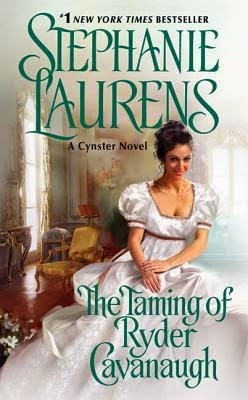
The Taming of Ryder Cavanaugh (Cynster Sisters Duo #2, Cynster #20)
Summary from Goodreads:
The 2nd in the Cynster Sisters duo, #1 New York Times bestselling author Stephanie Laurens thrills with this fantastic tale of a Cynster who'll stop at nothing for love.
Lady Mary has been waiting years for this opportunity. Not that her sister has thrown off her spinster ways and become betrothed, it's finally Mary's chance for true love. She knows exactly who she wants --and it's not someone as wild, unmanageable, and sinfully seductive as Ryder Cavanaugh.
Ryder Cavanaugh, Marquess of Raventhorne, had never met a woman who wouldn't happily fall at his feet--or into his bed...until Lady Mary Cynster. But Ryder has made some decisions about his life and he'll only succeed at being the man he wants to be with Mary by his side. And convincing her of that fact is just the kind of challenge he thrills at...
Miss Mary Cynster – the last, unmarried Cynster female of her generation – is on the hunt for her hero. The coveted necklace has at last been passed to her and she is certain she’s found a suitable candidate: Lord Randolph Cavanaugh, half-brother to the rakish, dangerous Marquess of Raventhorne. Rand is twenty-four, well-off, handsome, and eminently suitable. If only Ryder didn’t constantly stand in her way.
Ryder Cavanaugh, Marquess of Raventhorne, overhears Mary muttering to herself about heroes and Rand at Henrietta’s engagement ball. He immediately realizes Mary has set her matrimonial sights on Rand – and that the strong-willed miss will eat the reluctant Rand alive. When Mary throws all Ryder’s polished flirtation back in his face when all other women would have melted at his feet, he is immediately intrigued. This woman has the backbone and background to make the perfect marchioness. Ryder hadn’t quite intended to enter the marriage market at this time, but as Mary pursues Rand – conveniently placing herself in Ryder’s vicinity every time – he decides that it is high time he bring Mary around to the idea of Ryder as a husband.
Fate forces both their hands. Ryder is stabbed by footpads one evening and rescued by Mary just as he loses consciousness. She remains with him through the night to nurse him as Ryder fights for his life – only to be trapped by the arrival of his haughty step-mother in the morning. Ryder quickly turns the tables on the Dowager Marchioness of Raventhorne by announcing his engagement to Mary, who wisely plays along. After consultation with Mary’s parents, it is decided that there is nothing else to be done. Mary and Ryder will marry - they are well-matched in family background and fortune and the grande-dames of the ton favor the pairing – and decide how their marriage will work.
This being a Stephanie Laurens novel, the road to the Happily Ever After is not without bumps and potholes. Someone wishes Ryder and Mary dead in typical Laurens fashion and she doesn’t disappoint – intrigue abounds. The penultimate scene is expertly constructed to allow Ryder to bare his manly, barbarian heart and do what few Laurens heroes do: cry. I loved every word and welled-up right along with the characters. I have a soft spot in my heart for Laurens’ heroes – they are big and tough and prowling and dead sexy as hell. Ryder has been endowed with leonine aspects of his own, the tawny, lion’s-mane of hair that women love to run their hands through, and that Mary quite appreciates.
A weird spot, though, occurred when Mary very pointedly asked Ryder to consummate their marriage ahead of the ceremony. She is refreshingly frank about acknowledging that all the Cynster women anticipated their vows…but the very grown-up Mary contrasted strangely with the three-year-old toddler Devil cradled in Devil’s Bride. It was as if I felt a little motherly toward her character. I was quite pleased with the way the scene was structured to give Mary agency as regards her own sexual experience but there was a little “my baby is all grown up”. The major pay-off in this novel comes in the Epilogue. I don’t want to spoil it for anyone but if this is truly the last Cynster novel Laurens ended her famous series on a wonderful note.
The 2nd in the Cynster Sisters duo, #1 New York Times bestselling author Stephanie Laurens thrills with this fantastic tale of a Cynster who'll stop at nothing for love.
Lady Mary has been waiting years for this opportunity. Not that her sister has thrown off her spinster ways and become betrothed, it's finally Mary's chance for true love. She knows exactly who she wants --and it's not someone as wild, unmanageable, and sinfully seductive as Ryder Cavanaugh.
Ryder Cavanaugh, Marquess of Raventhorne, had never met a woman who wouldn't happily fall at his feet--or into his bed...until Lady Mary Cynster. But Ryder has made some decisions about his life and he'll only succeed at being the man he wants to be with Mary by his side. And convincing her of that fact is just the kind of challenge he thrills at...
Miss Mary Cynster – the last, unmarried Cynster female of her generation – is on the hunt for her hero. The coveted necklace has at last been passed to her and she is certain she’s found a suitable candidate: Lord Randolph Cavanaugh, half-brother to the rakish, dangerous Marquess of Raventhorne. Rand is twenty-four, well-off, handsome, and eminently suitable. If only Ryder didn’t constantly stand in her way.
Ryder Cavanaugh, Marquess of Raventhorne, overhears Mary muttering to herself about heroes and Rand at Henrietta’s engagement ball. He immediately realizes Mary has set her matrimonial sights on Rand – and that the strong-willed miss will eat the reluctant Rand alive. When Mary throws all Ryder’s polished flirtation back in his face when all other women would have melted at his feet, he is immediately intrigued. This woman has the backbone and background to make the perfect marchioness. Ryder hadn’t quite intended to enter the marriage market at this time, but as Mary pursues Rand – conveniently placing herself in Ryder’s vicinity every time – he decides that it is high time he bring Mary around to the idea of Ryder as a husband.
Fate forces both their hands. Ryder is stabbed by footpads one evening and rescued by Mary just as he loses consciousness. She remains with him through the night to nurse him as Ryder fights for his life – only to be trapped by the arrival of his haughty step-mother in the morning. Ryder quickly turns the tables on the Dowager Marchioness of Raventhorne by announcing his engagement to Mary, who wisely plays along. After consultation with Mary’s parents, it is decided that there is nothing else to be done. Mary and Ryder will marry - they are well-matched in family background and fortune and the grande-dames of the ton favor the pairing – and decide how their marriage will work.
This being a Stephanie Laurens novel, the road to the Happily Ever After is not without bumps and potholes. Someone wishes Ryder and Mary dead in typical Laurens fashion and she doesn’t disappoint – intrigue abounds. The penultimate scene is expertly constructed to allow Ryder to bare his manly, barbarian heart and do what few Laurens heroes do: cry. I loved every word and welled-up right along with the characters. I have a soft spot in my heart for Laurens’ heroes – they are big and tough and prowling and dead sexy as hell. Ryder has been endowed with leonine aspects of his own, the tawny, lion’s-mane of hair that women love to run their hands through, and that Mary quite appreciates.
A weird spot, though, occurred when Mary very pointedly asked Ryder to consummate their marriage ahead of the ceremony. She is refreshingly frank about acknowledging that all the Cynster women anticipated their vows…but the very grown-up Mary contrasted strangely with the three-year-old toddler Devil cradled in Devil’s Bride. It was as if I felt a little motherly toward her character. I was quite pleased with the way the scene was structured to give Mary agency as regards her own sexual experience but there was a little “my baby is all grown up”. The major pay-off in this novel comes in the Epilogue. I don’t want to spoil it for anyone but if this is truly the last Cynster novel Laurens ended her famous series on a wonderful note.
23 June 2013
It Happened One Midnight (Pennyroyal Green #8)
Summary from Goodreads:
More than one beautiful woman’s hopes have been dashed on the rocky shoals of Jonathan Redmond’s heart. With his riveting good looks and Redmond wealth and power, the world is his oyster—until an ultimatum from his father and a chilling gypsy prophesy send him hurtling headlong toward a fate he’ll do anything to avoid: matrimony.
Intoxicating, elusive Thomasina de Ballesteros has the bloods of London at her feet. But none of them knows the real Tommy—the one with a shocking pedigree, a few too many secrets, and a healthy scorn for rakes like Jonathan.
She is everything Jonathan never wanted. But on one fateful midnight, he’s drawn into Tommy's world of risk, danger…and a desire he’d never dreamed possible. And suddenly he’s re-thinking everything...including the possibility that succumbing to prophesy might just mean surrendering to love.
In Like No Other Lover, the second book from Julie Anne Long’s Pennyroyal Green series, Jonathan Redmond receives a prophecy from a Gypsy: he will have ten children and break hearts. And he does – break hearts, that is, because no lady of the ton has yet enticed him into matrimony. Until the day his staid father issues an ultimatum: Jonathan will receive no more monetary assistance from him, nor investments, unless he marries. Marries appropriately, that is, since Lyon is still missing and Miles married the unsuitable Cynthia. Jonathan is now cash-poor and desperate to prove himself to his father.
Thomasina de Ballesteros – Tommy to everyone – is the mysterious beauty who has captivated the rakes of the ton. Tommy, however, has no use for any of them. Unless they can provide her with access the Duke of Greyfolk, possibly, but her reasons for that need are her own. When Jonathan catches her spying through Greyfolk’s window the two exchange barbs then part. They don’t need one another. Fate keeps throwing them together. Tommy needs to turn a quick profit and Jonathan needs capital to invest in a four-color printing press. A daring nighttime excursion to rescue an enslaved child and a shady mill operation keep Jonathan and Tommy working together, but external forces (parents, Society, money) work against them.
I really like the concept of this installment in the Pennyroyal Green series. The idea of self-made men (and women) was very radical in the Regency era. In a way, that freed Jonathan from his father’s strictures – by not being tied to “old money” he was able to make his own decision regarding Tommy. The problems of modern corporate capitalism are echoed here in the Mercury Club investment group and their refusal to acknowledge the virtual enslavement of children. There is a beautiful chapter later in the book as Violet gives birth to Ardmay’s child. But there are some parts of the book I found highly improbable, particularly regarding the Diamonds of the First Water deck. While funny and daring and a way to use the cattiness of Society ladies against them whilst making a heap of money off of vanity (then using the idea to turn the tables on Isaiah Redmond) I just didn’t buy the concept in the historical setting. A young lady considered a “diamond of the first water” would not have risked her reputation by deliberately posing (and then ensuring all London knew she had personally modeled for the portrait) for something as vulgar as a deck of playing cards.
Before receiving the DRC of It Happened One Midnight I hadn’t read any of the Pennyroyal Green series so I power-read the first seven books. While one could read this eighth installment by itself, I understood considerably more about why Isaiah Redmond acted the way he did since I took the time to read the series. The series also has an interesting layout by alternating between the Redmond (even numbered books) and Eversea (odd numbered books) families, the Capulets and Montagues of the town of Pennyroyal Green. It Happened One Midnight is a quick read, enjoyable for Tommy’s and Jonathan’s financial daring, but I didn’t get the same enjoyment from the book as I did with book 3 (I Kissed An Earl) or book 7 (A Notorious Countess Confesses), which I consider Long’s best installment to date. There are still a few unwed Redmonds and Everseas and I am interested to see how Long concludes the series.
More than one beautiful woman’s hopes have been dashed on the rocky shoals of Jonathan Redmond’s heart. With his riveting good looks and Redmond wealth and power, the world is his oyster—until an ultimatum from his father and a chilling gypsy prophesy send him hurtling headlong toward a fate he’ll do anything to avoid: matrimony.
Intoxicating, elusive Thomasina de Ballesteros has the bloods of London at her feet. But none of them knows the real Tommy—the one with a shocking pedigree, a few too many secrets, and a healthy scorn for rakes like Jonathan.
She is everything Jonathan never wanted. But on one fateful midnight, he’s drawn into Tommy's world of risk, danger…and a desire he’d never dreamed possible. And suddenly he’s re-thinking everything...including the possibility that succumbing to prophesy might just mean surrendering to love.
In Like No Other Lover, the second book from Julie Anne Long’s Pennyroyal Green series, Jonathan Redmond receives a prophecy from a Gypsy: he will have ten children and break hearts. And he does – break hearts, that is, because no lady of the ton has yet enticed him into matrimony. Until the day his staid father issues an ultimatum: Jonathan will receive no more monetary assistance from him, nor investments, unless he marries. Marries appropriately, that is, since Lyon is still missing and Miles married the unsuitable Cynthia. Jonathan is now cash-poor and desperate to prove himself to his father.
Thomasina de Ballesteros – Tommy to everyone – is the mysterious beauty who has captivated the rakes of the ton. Tommy, however, has no use for any of them. Unless they can provide her with access the Duke of Greyfolk, possibly, but her reasons for that need are her own. When Jonathan catches her spying through Greyfolk’s window the two exchange barbs then part. They don’t need one another. Fate keeps throwing them together. Tommy needs to turn a quick profit and Jonathan needs capital to invest in a four-color printing press. A daring nighttime excursion to rescue an enslaved child and a shady mill operation keep Jonathan and Tommy working together, but external forces (parents, Society, money) work against them.
I really like the concept of this installment in the Pennyroyal Green series. The idea of self-made men (and women) was very radical in the Regency era. In a way, that freed Jonathan from his father’s strictures – by not being tied to “old money” he was able to make his own decision regarding Tommy. The problems of modern corporate capitalism are echoed here in the Mercury Club investment group and their refusal to acknowledge the virtual enslavement of children. There is a beautiful chapter later in the book as Violet gives birth to Ardmay’s child. But there are some parts of the book I found highly improbable, particularly regarding the Diamonds of the First Water deck. While funny and daring and a way to use the cattiness of Society ladies against them whilst making a heap of money off of vanity (then using the idea to turn the tables on Isaiah Redmond) I just didn’t buy the concept in the historical setting. A young lady considered a “diamond of the first water” would not have risked her reputation by deliberately posing (and then ensuring all London knew she had personally modeled for the portrait) for something as vulgar as a deck of playing cards.
Before receiving the DRC of It Happened One Midnight I hadn’t read any of the Pennyroyal Green series so I power-read the first seven books. While one could read this eighth installment by itself, I understood considerably more about why Isaiah Redmond acted the way he did since I took the time to read the series. The series also has an interesting layout by alternating between the Redmond (even numbered books) and Eversea (odd numbered books) families, the Capulets and Montagues of the town of Pennyroyal Green. It Happened One Midnight is a quick read, enjoyable for Tommy’s and Jonathan’s financial daring, but I didn’t get the same enjoyment from the book as I did with book 3 (I Kissed An Earl) or book 7 (A Notorious Countess Confesses), which I consider Long’s best installment to date. There are still a few unwed Redmonds and Everseas and I am interested to see how Long concludes the series.
22 June 2013
The Ocean at the End of Lane
Summary from Goodreads:
Sussex, England. A middle-aged man returns to his childhood home to attend a funeral. Although the house he lived in is long gone, he is drawn to the farm at the end of the road, where, when he was seven, he encountered a most remarkable girl, Lettie Hempstock, and her mother and grandmother. He hasn't thought of Lettie in decades, and yet as he sits by the pond (a pond that she'd claimed was an ocean) behind the ramshackle old farmhouse, the unremembered past comes flooding back. And it is a past too strange, too frightening, too dangerous to have happened to anyone, let alone a small boy.
Forty years earlier, a man committed suicide in a stolen car at this farm at the end of the road. Like a fuse on a firework, his death lit a touchpaper and resonated in unimaginable ways. The darkness was unleashed, something scary and thoroughly incomprehensible to a little boy. And Lettie—magical, comforting, wise beyond her years—promised to protect him, no matter what.
A groundbreaking work from a master, The Ocean at the End of the Lane is told with a rare understanding of all that makes us human, and shows the power of stories to reveal and shelter us from the darkness inside and out. It is a stirring, terrifying, and elegiac fable as delicate as a butterfly's wing and as menacing as a knife in the dark.
Neil Gaiman is such a good storyteller he makes me want to cry. Just the way he builds worlds - they look like our world, but off just a little bit and he slowly scratches away at the intersection of fantasy and reality to reveal the story. The Ocean at the End of the Lane is like an extension of a Grimm's fairy tale or Sidhe (sp?) encounters. It just hijacked my brain.
This is my entire Goodreads review:
So, yeah, go read it. Wallow in it. Such a great book to kick off summer.
Sussex, England. A middle-aged man returns to his childhood home to attend a funeral. Although the house he lived in is long gone, he is drawn to the farm at the end of the road, where, when he was seven, he encountered a most remarkable girl, Lettie Hempstock, and her mother and grandmother. He hasn't thought of Lettie in decades, and yet as he sits by the pond (a pond that she'd claimed was an ocean) behind the ramshackle old farmhouse, the unremembered past comes flooding back. And it is a past too strange, too frightening, too dangerous to have happened to anyone, let alone a small boy.
Forty years earlier, a man committed suicide in a stolen car at this farm at the end of the road. Like a fuse on a firework, his death lit a touchpaper and resonated in unimaginable ways. The darkness was unleashed, something scary and thoroughly incomprehensible to a little boy. And Lettie—magical, comforting, wise beyond her years—promised to protect him, no matter what.
A groundbreaking work from a master, The Ocean at the End of the Lane is told with a rare understanding of all that makes us human, and shows the power of stories to reveal and shelter us from the darkness inside and out. It is a stirring, terrifying, and elegiac fable as delicate as a butterfly's wing and as menacing as a knife in the dark.
Neil Gaiman is such a good storyteller he makes me want to cry. Just the way he builds worlds - they look like our world, but off just a little bit and he slowly scratches away at the intersection of fantasy and reality to reveal the story. The Ocean at the End of the Lane is like an extension of a Grimm's fairy tale or Sidhe (sp?) encounters. It just hijacked my brain.
This is my entire Goodreads review:
Love. Love. Love. Love. Love. Love. Love. Love. Love. Love. Love. Love. Love. Love. Love. Love. Love. Love. Love. Love. Love. Love. Love. Love. Love. Love. Love. Love. Love. Love. Love. Love.
It's like a fairy tale that went for a walk and got lost in someone's memoirs.
So, yeah, go read it. Wallow in it. Such a great book to kick off summer.
21 June 2013
The Mad Earl's Bride
Dorian Camoy has worked all his life to hide his sensual, dangerous side from his Puritanical grandfather. His mother has the same passionate nature but when she descends into madness and is committed to an asylum Dorian's carefully arranged world comes crashing down. When he also begins to experience the same symptoms of madness - pressure in the head, visual phenomena like ghosts - he concludes that he will die raving mad, like his mother, and secretes himself in rural Dartmoor. A freak accident makes him the Earl of Rawnsley, a title he neither wants nor needs because his interfering relatives decide he needs a wife. Fast.
Gwendolyn Adams wanted - wants - to be a doctor but for a woman in the early nineteenth century this is an impossibility. So she has studied, found a mentor, and has been waiting for an opportunity to implement her education. When her family proposes that she marry the "Mad Earl" she accepts. Dorian, however, takes a bit of convincing.
What follows is a sweet love story tinged with sadness. Dorian is determined that, if he is truly going mad, that he not hurt himself or anyone else in any way. Gwen is determined to care for him and alleviate his symptoms - no matter the cost. She investigates his mother's symptoms and reaches an entirely different conclusion: Dorian's mother wasn't mad and neither is he. Gwen, armed with modern medicine, frees Dorian from the fear that he will die raving, tearing out his hair, drugged and manacled in an asylum but there is a bittersweet lining: Dorian isn't cured. Even though they are free to love one another their future isn't the bright and rosy one so often conveyed in romance novels.
The Mad Earl's Bride also brings back a few beloved characters from Lord of Scoundrels - Bertie Trent (in a deliciously earnest role) and Dain (strangely, Jessica is only mentioned obliquely). It is nice to see how Dain has come along since the end of his book a few months prior.
The Mad Earl's Bride was originally published in the 1995 anthology Three Weddings and a Kiss and has been re-released as a stand-alone e-novella by Avon. I received access to a DRC via Edelweiss through the Avon Addicts program.
Gwendolyn Adams wanted - wants - to be a doctor but for a woman in the early nineteenth century this is an impossibility. So she has studied, found a mentor, and has been waiting for an opportunity to implement her education. When her family proposes that she marry the "Mad Earl" she accepts. Dorian, however, takes a bit of convincing.
What follows is a sweet love story tinged with sadness. Dorian is determined that, if he is truly going mad, that he not hurt himself or anyone else in any way. Gwen is determined to care for him and alleviate his symptoms - no matter the cost. She investigates his mother's symptoms and reaches an entirely different conclusion: Dorian's mother wasn't mad and neither is he. Gwen, armed with modern medicine, frees Dorian from the fear that he will die raving, tearing out his hair, drugged and manacled in an asylum but there is a bittersweet lining: Dorian isn't cured. Even though they are free to love one another their future isn't the bright and rosy one so often conveyed in romance novels.
The Mad Earl's Bride also brings back a few beloved characters from Lord of Scoundrels - Bertie Trent (in a deliciously earnest role) and Dain (strangely, Jessica is only mentioned obliquely). It is nice to see how Dain has come along since the end of his book a few months prior.
The Mad Earl's Bride was originally published in the 1995 anthology Three Weddings and a Kiss and has been re-released as a stand-alone e-novella by Avon. I received access to a DRC via Edelweiss through the Avon Addicts program.
14 June 2013
Asterios Polyp
Summary from Goodreads:
The triumphant return of one of comics’ greatest talents, with an engrossing story of one man’s search for love, meaning, sanity, and perfect architectural proportions. An epic story long awaited, and well worth the wait.
Meet Asterios Polyp: middle-aged, meagerly successful architect and teacher, aesthete and womanizer, whose life is wholly upended when his New York City apartment goes up in flames. In a tenacious daze, he leaves the city and relocates to a small town in the American heartland. But what is this “escape” really about?
As the story unfolds, moving between the present and the past, we begin to understand this confounding yet fascinating character, and how he’s gotten to where he is. And isn’t. And we meet Hana: a sweet, smart, first-generation Japanese American artist with whom he had made a blissful life. But now she’s gone. Did Asterios do something to drive her away? What has happened to her? Is she even alive? All the questions will be answered, eventually.
In the meantime, we are enthralled by Mazzucchelli’s extraordinarily imagined world of brilliantly conceived eccentrics, sharply observed social mores, and deftly depicted asides on everything from design theory to the nature of human perception.
Asterios Polyp is David Mazzucchelli’s masterpiece: a great American graphic novel.
Next up in my catch-up-with-graphic-novels-I-missed I tracked down a copy of Asterios Polyp at the public library. A much-referenced book, so I was very interested in the story and style.
The art/drawing style is very rewarding. I hesitate to say it has a "mod" feel, because I don't think that's exactly it, but the limited color palettes made me think of a more vintage style. The story didn't make quite as much sense to me. It felt overly convoluted - and I'm not quite sure what was up with the twin thing except that it fed Asterios's obsession with duality - but I liked the coverage of Asterios's entire life and how he was forced to re-invent himself. Fabulous sequence of "everyday" events about 2/3 through.
The triumphant return of one of comics’ greatest talents, with an engrossing story of one man’s search for love, meaning, sanity, and perfect architectural proportions. An epic story long awaited, and well worth the wait.
Meet Asterios Polyp: middle-aged, meagerly successful architect and teacher, aesthete and womanizer, whose life is wholly upended when his New York City apartment goes up in flames. In a tenacious daze, he leaves the city and relocates to a small town in the American heartland. But what is this “escape” really about?
As the story unfolds, moving between the present and the past, we begin to understand this confounding yet fascinating character, and how he’s gotten to where he is. And isn’t. And we meet Hana: a sweet, smart, first-generation Japanese American artist with whom he had made a blissful life. But now she’s gone. Did Asterios do something to drive her away? What has happened to her? Is she even alive? All the questions will be answered, eventually.
In the meantime, we are enthralled by Mazzucchelli’s extraordinarily imagined world of brilliantly conceived eccentrics, sharply observed social mores, and deftly depicted asides on everything from design theory to the nature of human perception.
Asterios Polyp is David Mazzucchelli’s masterpiece: a great American graphic novel.
Next up in my catch-up-with-graphic-novels-I-missed I tracked down a copy of Asterios Polyp at the public library. A much-referenced book, so I was very interested in the story and style.
The art/drawing style is very rewarding. I hesitate to say it has a "mod" feel, because I don't think that's exactly it, but the limited color palettes made me think of a more vintage style. The story didn't make quite as much sense to me. It felt overly convoluted - and I'm not quite sure what was up with the twin thing except that it fed Asterios's obsession with duality - but I liked the coverage of Asterios's entire life and how he was forced to re-invent himself. Fabulous sequence of "everyday" events about 2/3 through.
09 June 2013
Relish: My Life in the Kitchen
Summary from Goodreads:
A vibrant, food-themed memoir from beloved indie cartoonist Lucy Knisley.
Lucy Knisley loves food. The daughter of a chef and a gourmet, this talented young cartoonist comes by her obsession honestly. In her forthright, thoughtful, and funny memoir, Lucy traces key episodes in her life thus far, framed by what she was eating at the time and lessons learned about food, cooking, and life. Each chapter is bookended with an illustrated recipe—many of them treasured family dishes, and a few of them Lucy's original inventions.
A welcome read for anyone who ever felt more passion for a sandwich than is strictly speaking proper, Relish is a book for our time: it invites the reader to celebrate food as a connection to our bodies and a connection to the earth, rather than an enemy, a compulsion, or a consumer product.
I can't remember where I first heard of Relish. Possibly Josh, of Brews and Books, on a Bookrageous podcast. But I do remember that when I first saw it in the store I bought a copy immediately.
First off, Lucy Knisley is a fantastic cartoonist. I just loved her style. Second, she tells stories that you want to read. The chapter where they go to Mexico and the adults all get food poisoning? Brilliant, hilarious, squirm-inducing, and so truthful. The chapter about finding perfect croissants? Living upstate with her mom?
As a bonus, Knisley has included recipes for sangria, chocolate chip cookies, carbonara (yum), etc. in between the chapters so you get a memoir and a cookbook in one!
ETA: Congrats to Lucy Knisley - Relish was named a 2014 Alex book!
A vibrant, food-themed memoir from beloved indie cartoonist Lucy Knisley.
Lucy Knisley loves food. The daughter of a chef and a gourmet, this talented young cartoonist comes by her obsession honestly. In her forthright, thoughtful, and funny memoir, Lucy traces key episodes in her life thus far, framed by what she was eating at the time and lessons learned about food, cooking, and life. Each chapter is bookended with an illustrated recipe—many of them treasured family dishes, and a few of them Lucy's original inventions.
A welcome read for anyone who ever felt more passion for a sandwich than is strictly speaking proper, Relish is a book for our time: it invites the reader to celebrate food as a connection to our bodies and a connection to the earth, rather than an enemy, a compulsion, or a consumer product.
I can't remember where I first heard of Relish. Possibly Josh, of Brews and Books, on a Bookrageous podcast. But I do remember that when I first saw it in the store I bought a copy immediately.
First off, Lucy Knisley is a fantastic cartoonist. I just loved her style. Second, she tells stories that you want to read. The chapter where they go to Mexico and the adults all get food poisoning? Brilliant, hilarious, squirm-inducing, and so truthful. The chapter about finding perfect croissants? Living upstate with her mom?
As a bonus, Knisley has included recipes for sangria, chocolate chip cookies, carbonara (yum), etc. in between the chapters so you get a memoir and a cookbook in one!
ETA: Congrats to Lucy Knisley - Relish was named a 2014 Alex book!
08 June 2013
Smile/Drama
Raina Telgemeier's graphic novels are all the rage in the middle-grade section so I decided to give them a read.
Summary from Goodreads:
FAMILY, FRIENDS, BOYS...DENTAL DRAMA?! A true story
Raina just wants to be a normal sixth grader. But one night after Girls Scouts she trips and falls, severely injuring her two front teeth. What follows is a long and frustrating journey with on-again, off-again braces, surgery, embarrassing headgear, and even a retainer with fake teeth attached(!). And on top of all that, there's still more to deal with: a major earthquake, boy confusion, and friends who turn out to be not so friendly. Raina's story takes us from middle school to high school, where she discovers her artistic voice, finds out what true friendship really means, and where she can finally...smile.
Reading Smile I am once again reminded that I had it really easy tooth-wise growing up. I didn't need braces (I've got a few bottom teeth that are a bit crooked but they don't show) and I didn't need any oral surgery until my wisdom teeth had to come out after high school graduation (and that was an unfun adventure, let me tell you). Although I was lucky enough to avoid the hell that is the orthodontist's office, I did got through all those middle-school/adolescent problems that crop up in Raina's memoir: bad skin, mean friends, crushes on boys, bratty siblings, finding one's place in the grand scheme. This is really well-written and illustrated. I completely understand why kids gravitate toward this book. (Aside: Raina and I have to be the same age because I remember the SF earthquake happened when I was in middle school - that was ALL THE NEWS that month - and I had every skincare/hygiene/cosmetic product that pops up right down to the Epilady.)
Summary from Goodreads:
PLACES, EVERYONE!
Callie loves theater. And while she would totally try out for her middle school's production of Moon Over Mississippi, she can't really sing. Instead she's the set designer for the drama department stage crew, and this year she's determined to create a set worthy of Broadway on a middle-school budget. But how can she, when she doesn't know much about carpentry, ticket sales are down, and the crew members are having trouble working together? Not to mention the onstage AND offstage drama that occurs once the actors are chosen. And when two cute brothers enter the picture, things get even crazier!
Drama is a bit of a different fish, particularly since it switches from memoir to fiction. One thing I loved about this book is that it is very inclusive of LGBTQ and treats it in a very real-world way. Since we see the action from Callie's perspective, we are there with her while she's processing the idea that a boy she has a crush on might be same-sex oriented (I went through a similar experience in high school). As a fellow drama/crew kid I loved all the theatre stuff, but I didn't believe the level of quality/professionalism in the set design/tech to be middle school particularly because I didn't see many adults helping the kids. A fun book.
Summary from Goodreads:
FAMILY, FRIENDS, BOYS...DENTAL DRAMA?! A true story
Raina just wants to be a normal sixth grader. But one night after Girls Scouts she trips and falls, severely injuring her two front teeth. What follows is a long and frustrating journey with on-again, off-again braces, surgery, embarrassing headgear, and even a retainer with fake teeth attached(!). And on top of all that, there's still more to deal with: a major earthquake, boy confusion, and friends who turn out to be not so friendly. Raina's story takes us from middle school to high school, where she discovers her artistic voice, finds out what true friendship really means, and where she can finally...smile.
Reading Smile I am once again reminded that I had it really easy tooth-wise growing up. I didn't need braces (I've got a few bottom teeth that are a bit crooked but they don't show) and I didn't need any oral surgery until my wisdom teeth had to come out after high school graduation (and that was an unfun adventure, let me tell you). Although I was lucky enough to avoid the hell that is the orthodontist's office, I did got through all those middle-school/adolescent problems that crop up in Raina's memoir: bad skin, mean friends, crushes on boys, bratty siblings, finding one's place in the grand scheme. This is really well-written and illustrated. I completely understand why kids gravitate toward this book. (Aside: Raina and I have to be the same age because I remember the SF earthquake happened when I was in middle school - that was ALL THE NEWS that month - and I had every skincare/hygiene/cosmetic product that pops up right down to the Epilady.)
Summary from Goodreads:
PLACES, EVERYONE!
Callie loves theater. And while she would totally try out for her middle school's production of Moon Over Mississippi, she can't really sing. Instead she's the set designer for the drama department stage crew, and this year she's determined to create a set worthy of Broadway on a middle-school budget. But how can she, when she doesn't know much about carpentry, ticket sales are down, and the crew members are having trouble working together? Not to mention the onstage AND offstage drama that occurs once the actors are chosen. And when two cute brothers enter the picture, things get even crazier!
Drama is a bit of a different fish, particularly since it switches from memoir to fiction. One thing I loved about this book is that it is very inclusive of LGBTQ and treats it in a very real-world way. Since we see the action from Callie's perspective, we are there with her while she's processing the idea that a boy she has a crush on might be same-sex oriented (I went through a similar experience in high school). As a fellow drama/crew kid I loved all the theatre stuff, but I didn't believe the level of quality/professionalism in the set design/tech to be middle school particularly because I didn't see many adults helping the kids. A fun book.
06 June 2013
Sylvester (audiobook)
Summary from Goodreads:
When Sylvester, the Duke of Salford, first meets Phoebe Marlow, he finds her dull and insipid. She finds him insufferably arrogant. But when a series of unforeseen events leads them to be stranded together in a lonely country inn, they are both forced to reassess their hastily formed opinions, and begin a new-found liking and respect for each other. Sylvester calls to mind the satirical genius of a Jane Austen novel and is adored for its wit and a fast-paced plot that ranges across a myriad of settings.
I recently drove to Naperville and back (Eloisa James and Tessa Dare signings!!) so I took a few audiobooks along with me. First up was a Georgette Heyer novel, Sylvester, or the Wicked Uncle, read by the lovely, sexy Richard Armitage (yes, he of Venetia). There really isn't much I can say about the narration except please, BBC, adapt some Heyer and cast Armitage as one of the heroes. Please, please, please. Also, please narrate more audiobooks, Mr. Armitage, kthanxbai.
Plotwise, this is definitely one for fans of Jane Austen. It has a delightfully complex plot full of mistaken impressions and goofball relatives.
When Sylvester, the Duke of Salford, first meets Phoebe Marlow, he finds her dull and insipid. She finds him insufferably arrogant. But when a series of unforeseen events leads them to be stranded together in a lonely country inn, they are both forced to reassess their hastily formed opinions, and begin a new-found liking and respect for each other. Sylvester calls to mind the satirical genius of a Jane Austen novel and is adored for its wit and a fast-paced plot that ranges across a myriad of settings.
I recently drove to Naperville and back (Eloisa James and Tessa Dare signings!!) so I took a few audiobooks along with me. First up was a Georgette Heyer novel, Sylvester, or the Wicked Uncle, read by the lovely, sexy Richard Armitage (yes, he of Venetia). There really isn't much I can say about the narration except please, BBC, adapt some Heyer and cast Armitage as one of the heroes. Please, please, please. Also, please narrate more audiobooks, Mr. Armitage, kthanxbai.
Plotwise, this is definitely one for fans of Jane Austen. It has a delightfully complex plot full of mistaken impressions and goofball relatives.
Subscribe to:
Posts (Atom)