15 March 2012

Maya Rodale: The Writing Girls 1 - 3

So I came across The Tattooed Duke in our new Romance bays.  It sounded interesting...but it was also the third in Maya Rodale's Writing Girls series.  Eh, I decided to start at the beginning of the series since there were only three so far.

A Groom of One's Own opens with the wedding of Miss Sophie Harlow, a young lady in the gentry.  Except she is jilted, in the aisle of the church, when her fiancee informs her he's going to marry someone else.  Sophie flees to London to join her slightly scandalous childhood friend, Juliana, Lady Somerset.  Together, they become the first Writing Girls, writing about weddings (Sophie) and Society gossip (Juliana) for Mr. Derek Knightly at The London Weekly.

Except Sophie hates weddings now.  Develops near-panic attacks as the bride begins to walk down the aisle.  When the anxiety becomes too much for her she flees one set of nuptials and bumps into a very nice, well-mannered and considerate gentleman, Mr. Brandon.  As he escorts her home - since she's still a bit shaky - they strike up a rapport.  Imagine Sophie's horror when she is assigned to exclusively cover "The Wedding of the Year", the wedding of a double-duke to the daughter of another duke: her Mr. Brandon is the Duke of Hamilton and Brandon, engaged to Clarissa, daughter of the Duke of Richmond.  It's a dynastic marriage, uniting two great families and giving the impoverished Richmond financial support, and certainly not a love match.  It is the marriage Brandon desires because it is the proper thing to do.  It certainly isn't proper to start thinking about Sophie, desiring her, and how she makes his life better.

Now, there are some historical anachronisms (notably, female journalists really didn't exist, or at least exist publicly, in the Regency period) and the language and situational plot devices seem very modern.  But the creation of Sophie's phobia and the fact that Brandon is most definitely not the usual Regency rake (far from it) gives the tradition genre new life.  On the other hand, there is a rather unnecessary backstory mystery and a secondary love plot/character/solution that presents itself with "I WILL SOLVE THE PROBLEM" practically tattooed on his forehead.

Once Sophie's big day goes off without a hitch, Juliana steps into the spotlight in A Tale of Two Lovers.  The lovely widowed Lady Somerset is secretly the Lady of Distinction and no one knows who she is outside The London Weekly staff, not even her nemesis, The Man About Town, who writes a rival gossip column.  When Juliana spies Simon, Viscount Roxbury, having sex with an actress clad as a man, she thinks she's scored a juicy piece of gossip and uses her column to imply that the viscount is a homosexual.  The ton instantly believes this to be true even though Simon is likely the most notorious, womanizing rake in London.  The social ostracism sparks off a battle of wills between Juliana and Simon which results in more questionable, dueling newspaper columns, a cross-dressing visit to White's, a drunken serenade, a shooting, a hasty marriage, and the unmasking of The Man About Town.

A Tale of Two Lovers is a fun little read.  Juliana is stubborn, strong-willed, and completely off rakes since her husband died a notorious death involving a carriage, spirits, and a prostitute leaving her impoverished.  Simon is a bit unusual for a rake - he's at the mercy of his father's purse strings.  This novel is plotted very well - the B-plot involving the identity of The Man About Town is well inserted - and the sparring between hero and heroine makes for a good read.  The focus on homosexuality as deviant made me squirm a bit.  Even though the reaction is accurate for the period it got a bit uncomfortable after a while.

Now, there are actually four Writing Girls - the other two are Eliza, who is something like a gonzo or immersion journalist, and Charlotte, who writes an advice column.  Eliza is the heroine of The Tattooed Duke, the storyline of which caught my attention in the first place.  Sebastian Digby, the Duke of Wycliff, is a globe-trotting explorer in the vein of Captain Cook.  He's been gone from London for years.  London society is all agog to learn about his scandalous lifestyle so Eliza Fielding, known as W.G. Meadows to the readers of The London Weekly, goes undercover as a housemaid for the scoop.  Eliza has access to all the juicy gossip, including the fact that the duke is almost penniless and likely to try and marry for money.  Sebastian, on the other hand, is developing an affection for his cheeky housemaid - he even lets her see his scandalous, scandalous tattoos.  Jinkies.

I really liked the A-plot of this novel: mysterious, globe-trotting nobleman returns from who-knows-where sporting a collection of South Asian tattoos and falls in love with a reporter.  It's complicated by not one, not two, but three complicated B-plots.  The hero and heroine have a personal B-plot apiece plus there is competition for government funding.  Maybe could have used some editing.  The electronic file could have used better line editing as well: one might "console" another person, not "consol" and wear a "bauble", not a "bobble" (unless you're speaking of knitted garments and, considering the novel was set in London not the Aran Islands, I believe they were speaking of jewelry). 

There's just one Writing Girl left - Charlotte.  Despite some of my issues with each novel, they were fun to read and I'd like to see the conclusion of the series.

08 March 2012

Stephanie Laurens: The Cynster Sisters Trilogy

As mentioned previously, I read In Pursuit of Eliza Cynster then went back and started at the beginning of the Cynster series.  After a couple of days to get over the Bar Cynster, I polished off books three and one in the Cynster Sisters trilogy (Eliza's book is the second).  And I'll review them in that order since that informed my opinion of one of them.

Eliza Cynster is kidnapped at her elder sister Heather's engagement ball.  Although Eliza has been guarded due to a kidnapping attempt on Heather, the Cynster family thought she would be safe during the ball.  Although she is closely guarded, Eliza manages to make eye contact with a passing gentleman - scholar Jeremy Carling.  The two have an acquaintance and Jeremy believes the look on her face is out of character.  So he follows the getaway carriage, learns of Eliza's predicament, and follows them all the way to Edinburgh.  After a clever rescue, Jeremy and Eliza set off across Scotland with the kidnapping ringleader (but not, it seems, the mastermind) Scrope in hot pursuit. 

Although Jeremy is (what I realize now is the pattern-card for Cynster heroes) quite buff and perfect for a scholar, I liked how Eliza had a near-fatal flaw: she can't ride a horse.  This little detail added any number of diversions, back-tracks, and episodes of frustration over not being able to hire a gig/wheeled conveyance during the escape as well as providing convenient plot points where Jeremy and Eliza can engage in some pre-marital snogging.  One thing that was done well was the "introduction" of the extended Cynster family - by staying with the character "new" to the Cynster circle (Jeremy) the characters from the previous 19 or so novels can be summarized without obvious expositional time-outs.  New readers are caught up while old readers are not bored.

Given that Jeremy and Eliza appeared to witness the death of the unknown "laird" from a fall (there's some weird backstory for this laird character that doesn't make a lot of sense in book two), as The Capture of the Earl of Glencrae opens the Cynster family feels that the threat to Angelica, the youngest Cynster sister, is minimal and relax their guard.  Bold Angelica then practically orchestrates her own kidnapping.  While wearing the necklace Catriona loaned Heather, then Eliza (the provenance I understand having gone back to read Cynster #3 - it is supposed to help lead the girls to their true loves), Angelica asks for an introduction to mysterious English nobleman...who neatly kidnaps her during a party with no one the wiser.  The perpetrator soon confesses his true identity: Dominic Lachlan Guisachan, the eighth Earl of Glencrae, aka the laird who ordered the kidnappings of Heather and Eliza.  He didn't die, only landed on a ledge and messed up his knee.  Dominic needs Angelica's help to hoodwink his mother and save his clan.

Say what??

Yeah, those odd moments included in book two now make sense.  Dominic's mother is jealous of Angelica's mother.  Who was originally betrothed to Dominic's father until she eloped with Angelica's father at Gretna Green.  Dominic's father somehow kept tabs on Angelica's mother which caused Dominic's unstable mother to decide that everything that was wrong in her life (which, by all apparent standards, was comfortable and miserable only because she was nuts) is Dominic's father's fault.  So she stole an item of value that Dominic needs by a certain date to keep the clan out of penury.  She will only relinquish this item when Dominic kidnaps - therefore, compromises and disgraces - one of Angelica's mother's daughters and drags the girl up to Glencrae to be gloated over (and I totally apologize for the convoluted nature of the plot).  So Dominic makes a deal with Angelica: if she will travel to Glencrae with him, he will marry her when the ordeal is finished.

Now, there are all sorts of things in this plot that could drive me absolutely batty.  The speed at which Angelica "Stockholms" and agrees to Dominic's plot (that silly necklace is given way to much play).  The fact that Angelica is "unconventional" meaning she's a tomboy and has a brain and uses it.  The stalkerific nature of Dominic's father's scrapbooks detailing the details of his ex-fiancee's life.  The plot is beyond outer limits and crazy-pants.  And yet it all fits together to make a very readable book.  It's really my favorite of all the Cynster novels I've read so far.  One thing I really have to commend Laurens for is giving Angelica a rather modern and practical outlook on sex: she intiates it, participates in it eagerly, and gives Dominic a run for his money in the struggle for who gets to wear the pants in the relationship (yeah, yeah, the first night is still the best-est, most orgasmic first night you could ever possibly ask for but you can't get everything you want sometimes).  And I just have to mention the cover of this book - one of the loveliest covers, the colors are so lush.

The fact that I liked Angelica's book so much made me set the bar way too high for Heather's book, Viscount Breckenridge to the Rescue.  Bored Heather, tired of the usual round of "safe" parties for ton misses because that hasn't bagged her an appropriate Cynster-worthy husband yet, attends a dubious party of the demimonde where she crosses swords with her bete noir Timothy Danvers, Viscount Breckenridge.  When Heather stomps out of the party, Timothy witnesses her kidnapping - he immediately pursues the fleeing coach as it travels north to...Gretna Green?  Although Heather could have easily escaped with Timothy before they reached the infamous Scottish border town she refuses to do so because she suspects her sisters might also be in danger (which they are, but still - worst. plan. ever.).  When Timothy finally manages to break her out of the rooming house they hotfoot it a relatively short distance to the Vale of Casphairn (followed discreetly by a man/laird who seems to be the mastermind of the whole plot).

Now, this is where the book really started to lose me.  Heather and Timothy are attracted to one another but are given these ridiculous egos that constantly get in the way of true love.  When Heather consults Catriona she loans Heather the necklace on condition she pass it to Eliza then Angelica, Henrietta, and Mary in turn once each has found her hero (which makes me wonder what Laurens has in store for the two cousins).  Through the machinations of the Sight, Timothy is accidentally gored by a bull and nearly dies...which is way too much like Richard's nasty run-in with wolfsbane potion.  It is unfortunate, but this section of the book dithered around so much I was tempted to stop reading.  I think I would have liked it more had I not read Angelica's book which was better plotted (and flipped the bad guy over into the hero category).

Time to take another Cynster break but I'll make it through the rest of the series, not to worry!

06 March 2012

The Western Lit Survival Kit: mini-review

I really enjoyed Read This Next so I was looking forward to The Western Lit Survival Kit.

Sandra Newman snarks her way through literature, from the Ancient Greeks to the Modernists.  I enjoyed it greatly.  She name-checks I Spit on Your Grave when discussing Medea.  She calls Ezra pound on the floor:


Nowadays we would say that Ezra Pound had a personality disorder, which is what modern physicians have come up with to avoid saying the patient's an asshole.
(p 255)

I've read probably 80% of the books referenced in this guide.  So I can compare my thoughts to Newman's. I thought it was funny.

On the flip-side, if you haven't read a good portion of the Western literary canon you might have some trouble with The Western Lit Survival Kit.  The snark occasionally makes some books seem unreadable (cf. Medea) if you're just getting into reading classics.  If that's the case, read Beowulf on the Beach.  If you've read BotB and assorted books recommended therein, then give this one a shot.

04 March 2012

Stephanie Laurens: The Bar Cynster (plus one)

I picked up In Pursuit of Eliza Cynster the other week, read it, and liked it (review to come later).  But it's something like the 18th book in the Cynster series and 2nd in the Cynster Sisters Trilogy.

The mind boggles - I was interested in seeing how the whole thing started.

Which is with Devil and Honoria in Devil's Bride.  Miss Honoria Anstruther-Wetherby is a finishing governess just starting with a new family when she comes across an injured man in the forest.  He's been shot.  They are soon joined by a black-haired, green-eyed tyrant who immediately takes charge of the situation.  Due to an impending storm the stranger finds them all shelter at a nearby woodsman's hut.  At the height of the storm, the injured man - Tolly - dies of his wound.  In the morning, they are all discovered and the identity of the mysterious stranger is revealed: Sylvester Sebastian Cynster, sixth Duke of St. Ives, and known throughout the ton as Devil.  Honoria is also Compromised-with-a-Capital-C.  Because she has nightmares during storms she winds up looking rumpled, Devil is bare-chested because his shirt was used as a bandage, and, given his reputation as a rake, her virtue is now worth doodle-squat.  Devil has no problem introducing her as his fiancee - he's wanted her since about five seconds after they met - but Honoria has no intention of giving up her dreams of exploring interior Africa.

While the insta-love/lust plot is always a bit out there, the characters really make this book.  Honoria isn't just a mere governess but an heiress with a penchant for unconvenionality.  Devil, and five of his male cousins, make up the Bar Cynster - a group of known rakish bachelors who, although known to cut a swath through the lonely married or widowed ladies of the ton, defend their female family members (sisters, mothers, and eventually wives) with singular tenacity.  Devil's mother, Helena, is a delightfully frank French ton matriarch.  Over the course of this opening novel, Stephanie Laurens sets the stage for her sprawling family of prowling males and lovely young ladies.  As Devil and Honoria fall in love and learn to deal with each others' idiosyncracies, they also solve the mystery of Tolly's murder.

Vane - christened Spencer, but called Vane since he always knows which way the wind is blowing - is determined not to succumb to the dreaded disease of love.  As Devil obviously has.  So Vane makes A Rake's Vow (ha! see what I did there) to continue in his footloose ways.  Due to the weather he winds up paying an unexpected visit to his godmother, Minnie.  Strange things have been happening at Minnie's country house: things are going missing and the Spectre has been spotting roaming the grounds at night.  Vane stays to investigate and immediately gets entangled with Miss Patience Debbington.  Patience is Minnie's niece and she has no time for "elegant gentlemen" - her mother died of a broken heart because her rakish father failed to love in return and Patience wants no part of that.

The story of Vane and Patience and how they unravel the mystery of Bellamy Hall makes for a good read.  The collection of nutty hangers-on at Minnie's house gives off the air of an Agatha Christie house party.  There's a companion, Patience's brother, a family friend with her two children, a poet, a middle-aged lady who tats constantly, and an odd brother and sister researching the origins of Bellamy Hall.  Patience and Vane have a rather sweet romance that comes about when Vane realizes he will never escape Devil's fate.

Richard (Scandal - for some reason his nickname doesn't stick as well as the others' have), meanwhile, has been summoned to Scotland for the reading of a will.  Although he is Devil's brother, Helena isn't his mother, and the will being read belongs to his late mother's Highlander husband.  He is bequeathed his mother's necklace, a curious piece that immediately catches the eye of another guest present, Miss Catriona Hennessy, the Lady of the Vale.  Catriona is present because the deceased was her guardian - and she is now informed that, if she doesn't marry Richard in a week, her guardian's family will be disinherited and the wealth given to the Church.  Catriona is, understandably, pissed off.  She tries to worm her way out of the demand but when she consults The Lady, the inevitable must occur if he is to father the children forseen by The Lady: Richard and Catriona marry before leaving for the Vale of Casphairn (making her Scandal's Bride).  The most interesting aspect of this book is the focus on the pre-Christian mystical aspects of Catriona's "Sight" and how the Vale passes from mother to daughter.  It's a nice contrast to the concentration on primogeniture elsewhere in Britain. 

Demon (Harry) has promised his mother that he won't marry by special license, unlike his elder brother Vane.  He had no trouble making the promise because he's determined to never marry.  Now where have we heard that before?  Demon holes up at his stud farm in Newmarket - he is a genius when it comes to breeding horses - to avoid the matchmaking mamas of the ton.  While watching the grooms excercise his racing stock Demon spies an oddly familiar groom.  The slight boy turns out to be Miss Felicity Parteger aka Flick, the niece of a good friend, and she's soon forced to let Demon in on a secret: her dimwitted cousin is in hiding due to getting mixed up in a race-fixing scheme.  The two begin to investigate the syndicate together and wind up in all sorts of compromising situations (including the Point-of-No-Return-for-a-bachelor-and-a-young-lady) before finally (finally) sorting everything out.  Laurens works horses into nearly every conversation in a way that is rather endearing and a conversation between Flick and Lady Osbaldestone (who is the Dowager Duchess of Dovedale-type character in this series) illuminates the peculiar "rules" regarding courtship between a more experienced gentleman of thirty and a young miss of only twenty.  Which are boring and cause nothing but trouble for about thirty boring pages.  The title is A Rogue's Proposal which I wasn't able to work into the review.  Sad but true.

There are only two members of the Bar Cynster left and Gabriel (Rupert) is determined to remain unattached.  Which is why he's lurking on the steps of St. George's Hanover Square in the small hours of the morning in the hopes of meeting a mysterious Countess.  She needs help - her late husband has signed a suspicious purchase of shares in an unheard of mining company in South Africa and if the note is called in the family will be beyond destitute.  Gabriel agrees to help her in any way he can - and seduce her along the way.  Lady Alathea Morwellan, confirmed spinster, has no idea Gabriel intends to seduce her.  The two have been at odds since their teens when childhood familiarity gave way to adolescent awkwardness.  Alathea invented the Countess to get Gabriel's attention but the disguise is hard to drop even when lust threatens to get them in trouble; she's always had A Secret Love (hehe) for Gabriel.  When Gabriel unmasks the Countess, he is understandably angry for about 12 hours (mostly because he feels taken advantage of) but he returns to help Alathea sort out the Morwellan's financial troubles.  The backstory of childhood friends/sweethearts changes-up the relationship and lends the idea that one's best friend is also likely to be one's best life partner.  The mystery is good, too.

And then there was one.  Lucifer (Alasdair) leaves directly for Devon after his brother's wedding.  He does not want to learn All About Love so he's off to visit a fellow collector, Horatio, who has enticed him down with reports of a mysterious find.  Unfortunately, Lucifer arrives to find Horatio deceased - stabbed in the chest and dead only minutes.  Before he can summon help Lucifer is accidentally knocked unconsious by Miss Phyllida Tallent, who is lurking in the house for a mysterious reason of her own.  Once it's clear Lucifer didn't kill Horatio, the book gets down to the business of small town village life, finding the mysterious item that excited Horatio, and unmasking Horatio's murderer.  While I found the ultimate motivation of the murderer to be vague (aside from sociopathic tendencies), I really liked the development of Lucifer and Phyllida's relationship.  Horatio's books also made the bibliophile in me happy.

Laurens throws in a last-minute Cynster: Gyles Rawlings, the Earl of Chillingworth.  He's appeared in nearly all six previous books as a foil to the Bar Cynster.  He's just like them, so was used to spark jealousy on occasion, and is elected an honorary Cynster for services to the dukedom (he helped sort out Tolly's murderer and assisted in Alathea's rescue).  And he gets his own book - All About Passion - in which he sets out to have a perfectly boring, arranged, and altogether passionless marriage by arranging to marry Miss Francesca Rawlings, a distant cousin whose dowry includes the land that completes that of his estate.  All he wants is an heir so he needs a quiet, pliant wife.  A chance meeting during the marriage negotiations leads him to think he chosen bride is Franni, quiet, blond, and sweet.  Certainly not the black-haired hellion who sets his blood on fire.  But this is a romance novel so, guess what?  His bride is the half-Italian, passionate woman he desires...and it scares the hell out of him. 

There were a number of interesting scenes in this book - the progress through the estate village, the plum-picking scene, the Harvest Festival - that painted a lovely picture of rural Regency Britain.  The bedroom scenes were ridiculously hot and there may have been more in this book that in any of the others.  All About Passion loses points, however, by borrowing part of the mystery plot from Devil's Bride.

So that's the first seven Cynsters.  I'm having trouble telling the heroes apart so I think I'll take a bit of a break.

01 March 2012

The Madison Sisters Trilogy


Well, Lynsay Sands may have just lost me as a reader.  I read The Countess and The Heiress back in November when I was working my way through her historicals.  Both are quick reads and overlap - once you've read The Countess, parts of The Heiress are a bit boring (you get the scenes-that-you-only-saw-the-tail-end-of-in-book-1).

But they are funny books.  The scenes where the the sisters are trying to conceal the death of Christiana's husband (who turns out to not quite be her husband in name because he's actually the evil twin brother...it makes sense in the book) followed by the attempts of Richard and Daniel to hide the dead body are hilarious.  Lots of opportunity for slapstick.

Sands also set up a good mystery - the three girls all have substantial inheritances, kept secret because the money would not become theirs until marriage.  Well, an unsavory character discovered the secret and that's what drives Christana's marriage to the fake-Richard followed by an attempt to trick Suzette into a hasty marriage (even though Daniel has already agreed to marry her).  (Note to self: never gamble with sketchy characters by yourself in London....the girls' father got drugged, gambled away most of the estate, and the bad dudes who want to marry the sisters are the holders of the vowels.)

So that's two books.  They were entertaining for a couple hours.  They made me laugh.  So I went ahead and pre-ordered the third book, The Husband Hunt, for my nook.  I felt like I ought to read Lisa's story given that I'd read the first two and, considering that her book is set a few years later, it wouldn't re-tread the same ground as the first two. In this one, Lisa - having crushed on the family neighbor for most of her life - is determined to marry him but for Robert's part, his parents having a spectacularly bad marriage, he's definitely gun-shy regarding getting hitched.

Oh, dear.  I was so, so wrong.  I hated this book, really, truly hated it.  It reminds me of all the reasons why I stopped reading romance novels in the first place: a heroine that is too stupid to live.  I would have DNF'd this book and returned it after 40 pages but I bought it on my nook...no returns possible.  So I finished it.  For lack of any other coherent thought about his book, here's the bulk of my Goodreads review (and spoilers will abound, so you're warned if you want to read this):

Things (the major ones) that rubbed me wrong:
1) Lisa (and the maid) not knowing that Mrs. Morgan (whom Lisa met in the village near her brother-in-law's house) doesn't have a respectable London address or noticing that something truly "hinky" was going on when they got there.  The ton ALWAYS knows where the better parts of London are and if they don't know the servants certainly do.
2) Lisa developing a strange attachment to the see-through lingerie she's forced into at the brothel after being essentially Roofied and almost raped. She wears it for Robert later...WTF?
3) Bad dude can be seen coming nearly a mile away. Lisa has two brothers-in-law who seem well-placed to investigate the man yet they seem to know nothing. (And considering that the bad guys in the previous two books admitted there was a plot to marry and then kill all three sisters for their money...that problem seems to have been entirely forgotten....gah)
4) Christiana and Suzette (the three girls in this family have almost laughable names) dress up as prostitutes to enter a house with a BDSM basement and distract servants used to abusing women...worst. plan. ever.
5) Lisa gets kidnapped/attempted kidnapped five times in this book. You'd think she'd learn about running off on her own to strange addresses....
6) Worst foreshadowing ever: the window in Lisa's room has a lock that doesn't work right...and how does the villain enter the house later? dum, dum, daaaaahhhh

Additionally, Robert's issues with marriage have to be the weakest arguements ever.  EVER.  His two friends obviously have good marriages so the comparison with his parents' is ridiculous.

I understand that romance novels require some suspension of disbelief to make the plots work sometimes.  Someone has to have a misunderstanding, or the note gets misplaced, or a long-standing grudge comes to an almost laughably easy resolution...but wow, I didn't expect the plotting and characters of The Husband Hunt to be this dense.  I'm definitely thinking twice about buying any new Sands historicals.  Definitely a case of read-first, buy-if-liked.

27 February 2012

Jillian Hunter: the Boscastles

Having read through Eloisa Jamse's Desperate Duchesses I decided to follow up with Jillian Hunter's Boscastle series.  Well, the first six anyway (after the initial set of brothers and sisters I couldn't muster up the energy for the cousins).

The Seduction of an English Scoundrel opens with a bride left at the altar.  Lady Jane Welsham, eldest daughter of the Earl of Belshire, was to have married Sir Nigel Boscastle - only Nigel fails to appear.  Unbeknownst to the guests Nigel has run off to marry his true love (and wait until you get a load of her) with Jane's blessing (because now she and her sisters will be free to make their own love-matches).  Everything would have gone off swimmingly except for one Grayson Boscastle, Marquess of Sedgecroft, who gets in the way.  As head of the Boscastle family Grayson decides that Jane should not suffer the social ostracism of a broken engagement. The notorious rake is determined to squire Jane about Society until the appropriate gentlemen take an interest in her.

Except this is a romance novel and the minute Grayson is described as "lion-like" with his golden mane of hair and Boscastle Blue eyes you know right where this is going.  Although he has the rake reputation for good reason, he hasn't been doing much "rake"-ing of late.  He interited the marquessate after the sudden death of his father, brought on by the mysterious death of his youngest brother, Brandon, in India.  Now he's the head of a rambunctious, grieving family and the determined playboy has reluctantly started thinking he just might need a wife.  Jane (and her heart-shaped bottom, which Grayson had been ogling during the botched wedding) is able to tie Grayson into knots; likewise Jane is having trouble dealing with her physical reaction to Grayson's close attentions.  When Grayson finds out about Jane's role in the wedding debacle - and the two start taking "revenge" on each other - the road to the altar is both sexy and funny (Congreve rockets, who knew?).

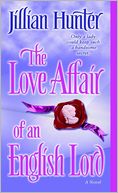
Chloe, the youngest sister, takes up the series in the second book, The Love Affair of an English Lord.  The title is a bit of a misnomer - this isn't so much a love affair as a murder mystery.  Chloe has got herself banished to the country for misbehaving with Baron Brentford in the previous book (the baron makes himself a nuisance in several Boscastle books).  One night she finds Dominic, Viscount Stratfield, in her closet.  Aside from total social ruin if Dominic is found in her closet (and he's really hot, truth be told), he is also supposed to be dead and buried (he is still recovering from the stab wounds).  Chloe keeps his secret, they have insta-lust, then fall in love, and you can guess the rest.  I didn't like this as much as the first book - I missed the light touch - and the book feels like it has a few plotholes.

But I kept on reading the series because I wanted to get to The Wedding Night of an English Rogue.  This is Heath's book (and he's really not a rogue - that sobriquet would belong to Devon or Drake).  Heath is probably the most respectable of the Boscastle males - a decorated soldier and respected intelligence officer.  Heath agrees to play bodyguard to his commander's fiancee.  Lady Julia Hepworth Whitby, a rich widow, once captured Heath's heart when they were young - by accidentally shooting him at a house party.  They are now older and wiser but no less attracted to each other.  Through a series of incidents and revelations (and a naked sketch) Heath and Julia rekindle their old romance, taking it to the logical conclusion.

I liked this installment slightly better than Grayson and Jane's book.  The past history between hero and heroine makes for a good backbone to the story and the mystery/thriller aspect of the tale is tight and well-plotted.  Just one plothole: years-old scars do not disappear and reappear when convenient for the narrative (Heath's shirt is off in one scene and Julia doesn't mention his scars yet in a later scene Julia gets his shirt off and the scars are a topic of conversation).

The rakish Drake is next up for romance in The Wicked Games of a Gentleman.  Whilst angling to catch - I'm not sure what the correct word is when gentlemen compete for the exclusive attentions of a mistress, "hire" doesn't seem appropriate - the fascinating courtesan Maribella, Drake gets caught up in helping governess-cum-companion Eloise Goodwin track down her charge. Eloise is tasked with keeping the spoiled Thalia out of the arms of unsuitable men and down the aisle for her wedding in several weeks' time (note: Thalia's brother is a spineless spendthrift) meaning Drake's assistance is needed on a few occasions.  But Eloise has problems of her own - a weaselly piece of turd from her past is threatening her with blackmail - and Drake happily gives up the charms of the courtesan for those of the governess.  While not quite as good as the previous book, Hunter's light touch kept the book going even when the mystery plot became convoluted (I will never think of "bobbing for apples" in the same way again).

The last unmarried Boscastle male, Devon, is determined to stay that way.  Until a house party guest in The Sinful Nights of a Nobleman tricks him into a compromising situation with Miss Jocelyn Lydbury.  Hedonist that he is, Devon is a well-bred gentleman to the core and he proposes to Jocelyn on the spot, marrying her a few weeks later in London.  Trouble follows them, however.  Someone with a grudge is trying to drive a wedge between husband and wife, with most efforts meant to dishonor or injure Devon in some way.  Devon and Jocelyn also learn to live with one another and rearrange their lives to make the marriage work.  I really liked how Hunter changed up the marriage plot in this novel to keep it from feeling too much like the previous books.  It also brings up some plot threads laid in Chloe's books (those plotholes I mentioned are partially filled here).

This leaves the final book in the original Boscastle six for Emma, the Dainty Dictator.  I have an issue with Emma - as a stickler for what is "proper" in the ton and Society, why the hell is she running a finishing school for young ladies?  That smacks a bit of governessing and trade.  Anyhoo, proper Emma, who is getting lonely now that she's finished mourning her husband, receives an unwelcome advance from a suitor.  Adrian Ruxley, the disgraced Viscount Wolverton, comes to her rescue but is accidentally coshed by a housemaid.  Oops.  Adrian recouperates from his injury under Emma's roof (which is really Heath's and Julia's house) and begins to drive Emma distracted.  Much as he tries to court her, the Boscastle brothers get in the way of any sort of "seduction" forcing Adrian to break into Emma's bedchamber to propose (the Boscastle women get him safely out of the house once he's finished).

After the excitement of Heath/Drake/Devon's books, Emma's book is a bit anticlimactic.  The drama is all family drama on Adrian's side (and most of it due to jealous and irrational fathers).  Incidentally, Adrian is only the heir to a dukedom, not a duke as yet, so the title The Devilish Pleasures of a Duke is very much a misnomer.  This final volume is nice conclusion to the original six Boscastle siblings but I really don't have the energy to follow up with Gabriel's and the books belonging to other cousins/hangers-on.

17 February 2012

Garden Intrigue

Lauren Willig has taken us to Paris, back to London, to Ireland, back to London, the English countryside at Christmas, to India, back to Girdings for a parallel story, and back to Paris with her Pink Carnation series.  Dizzy yet?

We stay in Paris for Garden Intrigue and follow terrible-poet-and-sometime-spy Augustus Whittlesby as he carries out the Pink Carnation's directives.

Namely: Napoleon has a craft that can travel underwater.

Say what??  Yes, it is rumored that Napoleon has a submarine.

Augustus is tasked with obtaining much needed information about a device that could be devastating to the security of England.  Enter one Emma Morris Delgardie.  The widowed American ex-pat (oh, that infant nation bothering the mother country) regularly criticises his poetry and is best friends with Hortense Bonaparte nee de Beauharnais.  Emma is writing a masque for the entertainment at Malmaison where the device is to be unveiled.  Augustus offers his help with the masque and sparks fly...but not in the direction we, the readers, assume they will (the romance finally comes along as expected after taking an extended walk through self-examination).

(view spoiler)One thing that I really quite liked about this book is that Jane pretty much pissed me off (as oxymoronic as that statement sounds). Jane, in her cool, nothing-touches-my-heart persona of the Pink Carnation, squashed poor Whittlesby flat after his sincere declaration of love and then acted like she was doing everyone a favor. It's the first time she's depicted as other than a sweet, proper cousin or master spy.  Jane has developed an ego and it gives her more depth, even though it isn't flattering. I hope this is a lead up to knock her off-kilter in a future book.

I also, for the first time, enjoyed Colin and Eloise's framing story this time out. They've always been background for me, the relationship echoing what goes on in the spy story, and never seemed to move forward on their own (over nine books, well, eight since they didn't feature in The Mischief of the Mistletoe, their story has progressed from October 2003 to May 2004). Eloise's dilemma over staying for the boy vs leaving for her career is a very real one and it pulled the relationship forward.

While I liked Emma, she didn't top Letty and Arabella in the heroine rankings (she's probably duking it out with Mary or Laura - after Caroline Murat, Lady Vaughn won't scare her). Augustus, on the other hand, doesn't fare so well in the hero ranking. After Geoff, Miles, Turnip, Vaughn, Richard and Andre (tied), and Alex, the only hero he tops is Robert the Duke of Dovedale (who still strikes me as a wet blanket, sorry). Augustus is probably tied with Alex. He has very tough competition.

13 February 2012

The World of Downton Abbey: a mini-review

So, are you a Downton Abbey fan?  The best, soapy, frustating, World War I-era television miniseries around?

Then pick up The World of Downton AbbeyIt's so fun! A great explanation of the whys and wheretofores of the TV series. Julian Fellowes occasionally contributes insights from his own family which are endearing. The list of references in the back has added to my TBR!

Filled with photographs from the series (both in front of and behind the camera) and period photos.  An excellent companion for fans of the show.

12 February 2012

The Flight of Gemma Hardy

Hmm, another Jane Eyre retelling.  But this one is by Margot Livesey, a writer I've heard of but never read.

In The Flight of Gemma Hardy, the setting is updated to 1960s Britain.  Since the death of her widowed father young Gemma, born on Iceland, has been raised by her Scottish maternal uncle, a loving man, and his snobbish, resentful wife. When her uncle dies, her aunt treats her as an unwanted burden.  Gemma is a smart, resourceful child and wins a scholarship to Claypoole, a girls' school she thinks will be her path to University and a better life.  However, at Claypoole, she is treated little better than a scullery maid due to her status as a charity pupil. 

Claypoole slowly goes bankrupt.  Trying to keep her dreams of University alive, Gemma gains the position of nanny on a remote Orkeny Islands estate.  Mr. Hugh Sinclair is a London businessman with a mysterious past.  Gemma and Mr. Sinclair start spending more time with one another and, like her pattern-card, Gemma falls in love with her employer.  There is an interrupted wedding, a trek across England, a revelation, and a trip to Iceland.

I very much liked Livesey's writing style, so I will definitely check out her other novels.  At times the novel seemed to lock-step with Jane Eyre - the timeline was very precise so I found myself anticipating certain events.  But the update to the 1960s was quite good, capturing the last gasp of the era of charity pupils treated as servants in a rapidly evolving post-war Britain. 

Compared to a previous Jane Eyre retelling (Jane by April Lindner) that I read last year, I have to give Livesey many extra points for deviating from the original narrative at the point of the wedding.  She dispenses with the madwoman-in-the-attic/Rochester-is-already-married-plot - good, because that's the major element that doesn't translate to realistic modern fiction.  I didn't quite understand Sinclair's "secret" but I think it had more to do with the fact that he wasn't very truthful with Gemma or the world in general.  And Gemma, being conditioned to run from that distrust, flees.

There are characters who stand-in for the Rivers family but I appreciated how they weren't Gemma's real family.  In another deviation from the original, Gemma is helped to return to Iceland to find the remaining bits of her father's family that still live there.

I may have had too high a set of expectations from this novel, but I did like what Livesey did with it in the end.

11 February 2012

The Duke is Mine

Conveniently for me, I wrapped up the Desperate Duchesses series just in time for the new book in Eloisa's Fairy Tales series to appear.

The Princess and the Pea has been transformed into The Duke is Mine.  Tarquin, the Duke of Sconce, lives for logic, order, and mathmatical problems.  His mother is famous for having written a treatise on how to be the perfect duchess.  Note: Tarquin isn't married.

Olivia Lytton has been raised to be the perfect duchess.  Well, her parents tried - Olivia is less inclined to be sweet, attentive, and proper and more inclined to tell bawdy jokes.  The "duchification" system, as Olivia and her twin sister Georgiana have dubbed it, has served to gain Olivia a betrothal to the heir to the duchy of Canterwick.  The only problem is that Rupert will never grow into his full faculties - he was deprived of oxygen at birth and while sweet and energetic he will always remain a child in many ways.  When Rupert goes off to fight Napoleon (his father has arranged a "safe" commission), Olivia accompanies Georgiana to Sconce where there is a chance that Georgie could impress the Dowager Duchess with her absorption of the duchification guide.

Nothing goes according to plan.  While Georgie can pull off a superficial "perfect duchess" she'd really rather attend a lecture at Oxford.  Quin, master of logic that he is, is inexplicably drawn to Olivia's outspoken, goofy personality.  Olivia would rather not marry Rupert but she feels she really doesn't have much choice - particularly since Olivia and Rupert had been sent to her parents' library to engage in some improper behavior (a truly nails-on-chalkboard scene but written for that purpose) in the hopes that Olivia might conceive a child (which she didn't, and couldn't the way the scene played out).  When Rupert is injured, Quin and Olivia undertake a daring rescue to bring him home from France.

The Duke is Mine isn't quite as magical as A Kiss at Midnight but less "realistic" than When Beauty Tamed the Beast (read: the heroine doesn't almost die from scarlet fever and aspergillosis which she ought to have contracted after spending several days in a chicken coop).  This is a much funnier book, too, with the "duchification" system, the Mirror, and Olivia's dirty jokes.  The Princess and the Pea tie-ins are really well done, from the downpour on the night Olivia and Georgie arrive at Sconce and the "perfect duchess" competition to the "pea" that appears under a mattress near the end.  It does make for a Regency fairy tale.

09 February 2012

Eloisa James: Desperate Duchesses

Next up on my Eloisa James binge was a sextet of duchesses.  Desperate ones.

The Desperate Duchesses series is set in Georgian England - fantastical fashions, slightly looser morals, and a mania for chess.  Think Kiera Knightly as Georgiana, Duchess of Devonshire, in The Duchess or the whole cast of Dangerous Liaisons.

The series opens with Desperate Duchesses.  Roberta, the long-suffering daughter of an eccentric marquess, is in pursuit of a duke.  Not just any duke, but the dark, mysterious Duke of Villiers with whom she has a chance encounter at a party.  Roberta is determined to meet him again so she travels to London to take advantage of her relationship to a cousin, Jemma, Duchess of Beaumont.  Jemma has recently returned to London from Paris at the behest of her estranged husband, Elijah.  Jemma agrees to guide Roberta through society.  Her brother Damon, the scandalous Earl of Gryffyn, also lives at the Beaumonts' London residence with his illegitimate son.

Jemma, aside from her outrageous fashion sense, has a passion for chess.  She is a master, as is her husband....and the Duke of Villiers.  She is soon playing chess matches with each of them, in her bedroom, one move per day, a best of three series each.  Ton gossip quickly gives the matches the tone of a sexual overture. 

Roberta seems to be making headway with Villiers and he seems to like her.  He even proposes marraige.  Damon, however, has also taken a liking to Roberta.  With a little help from his son, and a surprise visit from Roberta's oddity of a father, Damon and Roberta fall in love.  The novel ends with a spectacular duel between Damon and Villiers - another parallel to chess.

With Villiers recovering from his dueling injury, the action shifts to John and Poppy, the Duke and Duchess of Fletcher, in An Affair Before Christmas.  Theirs was a whirlwind lovematch, an oddity in the ton, but now the couple are estranged.  Poppy doesn't believe they have anything in common any more, they are no longer affectionate with each other, and so she makes the scandalous decision to leave her husband.  She moves in with Jemma.  John, on the other hand, isn't quite sure what to make of his wife.  He still loves her, and wants her to be happy, but he doesn't know what she wants.

Poppy and John and How They Overcome The Dreaded Hair Powder (its a really good scene and incorporates a great deal of research about the Georgian period) is the primary plot and it ends in a nice reconciliation.  However, the side-plots involving Elijah's political devotee, Miss Charlotte Tatlock, and Villiers's infected dueling wound are actually a bit more interesting and provide the glue that holds this series together.

At the Twelfth Night masquerade that ends An Affair Before Christmas, Harriet, the widowed Duchess of Berrow, and Isidore, technically the Duchess of Cosway, dream up a plan for the dutiful and responsible Harriet to do something outrageous.  The convalescent Villiers, reluctantly (and mostly due to a physician-imposed ban on playing chess), escorts Isidore (desperately trying to make her globe-trotting husband come home) and Harriet (cross-dressing as Villiers's young protege) to the never-ending house party at Lord Justinian Strange's estate.  Everything there is decadent and amoral, just what the duchesses are looking for.  Strange, though, is attracted to Villiers's ward and soon starts teaching the effeminate young man to ride, fence, and be more of a manly man.  All the while, Harriet is falling in love with Lord Strange.  After the previous book, where I started questioning whether to keep reading the series, the love story of Harriet - who blames herself for her husband's death - and Strange - who uses the house party to keep the world at bay - kept me reading.

Isidore's husband does indeed come to claim her.  They were married by proxy as children and Simeon decamped to wander the globe before Isidore matured enough to consummate the marriage.  When the Duke Returns is the story of how a passionate, intelligent woman and a man who has spent years learning the wisdom of yogis and gurus come to trust and understand one another.  In a departure from the traditional hero type, Simeon is still a virgin.  As a student of "the Middle Way" he strives always to be in control and the frenzy that is strong emotion (i.e. lust) works against that.

Although the romantic plotline is the central plot in the novel, the secondary plots involving the bedside chess matches, Jemma and Elijah's progression toward reconciliation and Villiers's new-found desire to raise his illegitimate children - six altogether - under his roof are more eye-catching.  The novel ends with a spectacular set-piece - a prison break involving the Royal yacht, the rabble, and prison hulks (like those described in Great Expectations) - and the spectacular rescue of the Duchess of Cosway by her husband, the Duke.

Elijah also rescues Jemma from the yacht in dramatic fashion which opens their own book This Duchess of Mine.  As revealed in the side-plots of the previous books Elijah has a heart condition, what we would consider an arrhythmia in this day and age.  Because his father died an early death from what was likely the same disease (and in a shockingly scandalous location) Elijah feels he is running on borrowed time.  While he accepts that one day he may never wake up, Jemma continues to look for a way to keep Elijah with her.  They lost enough time.

This is easily my favorite novel of the six.  Because James was able to work out the majority of Elijah and Jemma's past issues through the side-plots of the first four books (slowly moving from anger and hurt to understanding and forgiveness) the main plot doesn't bog down in setting up the backstory.  It really concentrates on the final details necessary to bring together two characters who have overcome much personal hurt and grief to achieve their Happily Ever After.  There is a lot of honesty in this novel - the scenes where Jemma really struggles with accepting the possibility that Elijah may die soon are beautifully rendered and the scenes in the Roman baths and the blindfolded, sensual chess match take on a sweet, yearning quality (aside from being very, very arousing, which they are).

Meanwhile, Villiers has been going about trying to track down his children.  He finds one by the end of This Duchess of Mine - Tobias, who is stubborn, crafty, supercilious, lordly...oh, wait, it's a miniature Villiers, only covered in muck since the lawyer Villiers engaged to make sure the children were cared for decamped with their fees leaving the children God-knows-where.  All of which leads Villiers to the conclusion he needs a wife - pronto.  Considering that he needs a wife of proper social rank his choices are limited to two: Eleanor, daughter of the Duke of Montague, who is said to be a dreadful snob, and Lisette, daughter of the Duke of Gilner, who is supposed to be quite mad.

And so Villiers, the desperate Duke, gets the final book in the series, A Duke of Her Own.  He ends up at the Gilner's country residence which, fortuitously, is near the orphanage where his twin girls have been stashed by the deceitful lawyer and where, coincidentally, Eleanor is visiting Lisette.  So which should he choose as a wife?  Eleanor has gained her snobbish reputation rather by accident - she is in love with the Duke of Astley, they were childhood friends, she gave him her viriginity (which no one knows about except maybe her sister), the idiot went off and married another woman (who is sickly), and lovesick Eleanor really can't countenance marrying anyone else.  Lisette has a different problem - she has what we would recognize as untreated bipolar disorder...she is mad. 

Complications ensue.  Although Villiers would rather have Eleanor (and they do have quite a bit of fun on the riverbank), that cad Astley shows up, fresh from his wife's funeral, and immediately tries to claim Eleanor's hand.  Leaving batty Lisette to announce to everyone that she and Villiers are engaged.  Villiers thinks this might not be a bad thing - Lisette has no use for society or anyone's opinion of her, which is good for Villiers' half dozen illegitimate children - but Lisette deteriorates rapidly and in spectacular fashion.  Eleanor gives Astley the boot but he challenges Villiers to a duel for Eleanor's honor.

There are no side-plots in this final novel, no distractions by returning to Jemma and Elijah.  It's all on Villiers and he does close up the series quite well.  I just think - and this is my opinion here - that I would rather have had the series close with Jemma and Elijah since their longstanding problems and Elijah's heart condition make a really nice series arc.  That said, the final novel in the series was excellent.  I do wish that James had brought back her first four hero/heroine couples more often.  Roberta and Damon get a mention in book 4 (and a paragraph in book 5) but Poppy/Fletcher and Harriet/Strange get even less than that.  It was almost like they stopped being friends with Jemma even though enough time passes between and through the series that Jemma could have read some correspondence from Harriet (or attended her wedding, perhaps?) or Elijah could have met Fletcher for whatever reason in London.  It was a bit out of sight, out of mind.

03 February 2012

Eloisa James: the Essex sisters quartet

So, it's February.  And gray.  And blah.  And I have an unoccupied weekend.

So it's time for more Eloisa James novels.  I picked the Essex sisters quartet because I liked the titles.  Shakespeare, anyone?
 
The Duke of Holbrook - Rafe, who has a bit of a drinking problem - is informed that he is now guardian to the four orphaned daughters of a penniless Scottish viscount.  What's a duke to do except hire four nursemaids and buy nursery items times four...only to find out that his wards are lovely young women who possess a unique dowry - they each have title to a thoroughbred horse, some of the most coveted on the British Isles.  The eldest daughter, Tess, has determined that she must marry well.  And quickly - to help bring Annabel, Imogen, and Josie "out" in a proper manner.  Thus begins the courtship drama in Much Ado About You.  Rafe's friends - Lucius Felton, richest man in England, and Garrett Langham, the Earl of Mayne - decide which of them will get Tess...Mayne is the one to propose to Tess.  Meanwhile, the move from Scotland to England brings Imogen into contact with Lord Maitland whom she has had a crush on for years - only he has a fiancee (who, come to find out, can't stand the horse-mad young man).  When Imogen elopes with Maitland, Lucius (I swear, if this is ever made into a movie he must be played by Jason Isaacs in his Lucius Malfoy wig - it's a perfect description) tries to intercept them; failing that, he makes it possibly for them to marry immediately.  And when Mayne precipitately absconds on the morning of his wedding, it is Lucius who steps in to marry Tess.

This is a romance novel with a lot of "story" and a lot of "plot" - many characters to get through, many backstories to set up for the next three novels.  I felt like the evolution of Tess's and Lucius's relationship from convenience to love once married got a bit lost but provided a great contrast to Imogen and Maitland's marriage.

Annabel, seeing Tess's success, is determined to marry a rich, English, titled man.  No more penny pinching, account magicking, budgeting - no more Scotland.  Enter one Ewan Poley, the Earl of Ardmore.  He's Scottish, handsome as can be, and is staying in a London hotel because he (apparently) doesn't have the scratch to rent a proper London house.  Annabel isn't interested in an impoverished Scottish peer, no matter how handsome, but a quirk of fate caused by Imogen lands Annabel in a carriage with Ardmore on the way to his Scottish castle.  Alone.  Under the assumed guise of husband and wife. 

I laughed a bit with Kiss Me, Annabel.  Annabel's assumption that Ewan was as poor as her feckless father led to a prize comeuppance (and the treacle-and-feathers bit was really funny when you got right down to it, as well as Josie's matchmaking attempt).  I also wanted to strangle Imogen at nearly every point in this book.  To make a long story short, she's having some serious guilt regarding her failure to keep Maitland from breaking his neck (sorry, spoiler alert) and isn't dealing with it well at all.  She needs a spanking.

And, unfortunately for me, her book was up next - The Taming of the Duke.  Even though widowed, Imogen is still under Rafe's guardianship and she has no intention of heeding a drunk.  Rafe is dealing with issues of his own, namely a new-found half-brother who needs to stage a play at Holbrook Court to keep a bargain with the mother of his child.  Imogen, who is still having trouble dealing with Maitland's death, gets it into her head that Gabe would make an excellent lover - divinity scholar or no - but Rafe is having no part of it.  He decides to clean up - alcohol withdrawal is not pretty - and begins to woo Imogen in disguise.

Despite my loathing for Imogen, this is a really fun book to read.  And I like Imogen better for having read it.  Both she and Rafe are on self-destructive paths over guilt - Imogen for her husband, Rafe for his elder brother, Peter, who ought to have been the duke - and they each understand one another on that level.  They also fight like cats throughout most of the series so you know they have to get together by the end of this book.   On a literary level, James includes two fantastic bits of English theatre.  First, Rafe and Imogen go in disguise to a pantomime, something I wasn't familiar with (being an American) and had a fantastic time looking up.  Second, James has her characters present the Restoration comedy, The Man of Mode, which I have read as part of a course in Restoration literature.  It's a fantastic play which essentially skewers the "rake" men aspire to be.

Rafe and Imogen's engagement leads us to the final book in the series, Pleasure for Pleasure, and that is Josie's story.  She comes "out" just as Rafe and Imogen marry and her come-out isn't all it's cracked up to be.  For starters, Josie takes too much to heart the Regency ideal of thinness and straps herself into a hideous corset.  A wounded suitor manages to confer on her the sobriquet of "the Scottish Sausage" (not helped by stuffing herself into the dreaded corset).  The Earl of Mayne, freshly affianced himself, provides Josie with the courage to visit a new modiste - one who works magic with lush figures - and to flirt at a masquerade.  At a horse race Josie is lured behind the stables and assaulted (sort-of, she defends herself well).  To protect Josie, Mayne - recently dumped by his fiancee for a reason you have to read the book to understand - marries her immediately.

Tied in with Josie's story is that of her chaperone's.  Griselda has been with the girls since Much Ado About You, when Mayne suggests his respectable, widowed sister as the girls' chaperone (and to help bring them out properly).  Lady Willoughby is a funny side-character, practical and silly at the same time (it got to the point that I couldn't decide which was the real Griselda and which was the facade put on for benefit of society).  In a bid to get revenge for Josie's nickname, Griselda finds herself drawn into an affair...and a love-story of her own.

As you can see, the plots of all four books are intricately drawn.  They make wonderful reading for cold, dreary days when snuggling under blankets with hot, fragrant tea is the only activity you feel like doing.  It also makes them fiendishly hard to summarize without giving too much away.  Being romance novels, you know where the hero and heroine will end up - with the Essex sisters getting there is all fun.