31 May 2014

The Piano Shop on the Left Bank

Summary from Goodreads:
Walking his two young children to school every morning, Thad Carhart passes an unassuming little storefront in his Paris neighborhood. Intrigued by its simple sign — Desforges Pianos — he enters, only to have his way barred by the shop's imperious owner.
Unable to stifle his curiosity, he finally lands the proper introduction, and a world previously hidden is brought into view. Luc, the atelier's master, proves an indispensable guide to the history and art of the piano. Intertwined with the story of a musical friendship are reflections on how pianos work, their glorious history, and stories of the people who care for them, from amateur pianists to the craftsmen who make the mechanism sing. The Piano Shop on the Left Bank is at once a beguiling portrait of a Paris not found on any map and a tender account of the awakening of a lost childhood passion.

I picked up a copy of this book quite some time ago - certainly before I moved and was able to purchase my piano - but never got around to reading it until now.  This is a lovely short memoir - with a bit of history about piano construction thrown in for flavor - that demonstrates that a chance meeting can cause the return of a childhood passion.  For Carhart, that was the discovery of a piano restoration workshop/store in his Paris neighborhood; he had played a lot as a child but had let his lessons lapse.  Befriending Luc and purchasing a restored piano brought his love of music back.

I've been there.  Shortly after I moved into my new house I watched a documentary on the making of Steinway pianos, visited the Steinway website out of curiosity, asked for a catalogue to be sent via email, and then got an email from the local Steinway dealer about an upcoming factory sale.  Fast forward about a month and I purchased a beautiful upright - I play more now than I did during my last year of high school when I had a full schedule of practice and performances.

28 May 2014

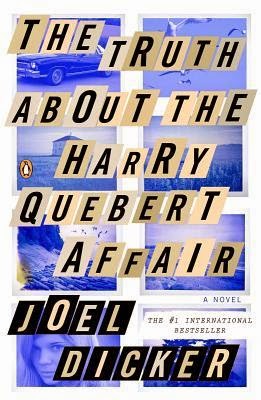
The Truth About the Harry Quebert Affair

Summary from Goodreads:
August 30, 1975: the day fifteen-year-old Nola Kellergan is glimpsed fleeing through the woods before she disappears; the day Somerset, New Hampshire, lost its innocence.

Thirty-three years later, Marcus Goldman, a successful young novelist, visits Somerset to see his mentor, Harry Quebert, one of America’s most respected writers, and to find a cure for his writer’s block as his publisher’s deadline looms. But Marcus’s plans are violently upended when Harry is suddenly and sensationally implicated in the cold-case murder of Nola Kellergan—whom, he admits, he had an affair with. As the national media convicts Harry, Marcus launches his own investigation, following a trail of clues through his mentor’s books, the backwoods and isolated beaches of New Hampshire, and the hidden history of Somerset’s citizens and the man they hold most dear. To save Harry, his writing career, and eventually even himself, Marcus must answer three questions, all of which are mysteriously connected: Who killed Nola Kellergan? What happened one misty morning in Somerset in the summer of 1975? And how do you write a successful and true novel?

A global phenomenon, with sales approaching a million copies in France alone and rights sold in more than thirty countries, The Truth About the Harry Quebert Affair is a fast-paced, tightly plotted, cinematic literary thriller, and an ingenious book within a book, by a dazzling young writer.

The Penguin First To Read program is a bit interesting - offer readers the chance to snag choice DRCs ahead of publication (there's a way to guarantee a copy if necessary) and submit reviews.  I had been striking out on the random drawings thus far so I decided to plunk down some points to read the much-buzzed The Truth About the Harry Quebert Affair.  A little feedback for Penguin: one month to read a 700 page novel isn't long enough (particularly when the DRC expires three weeks ahead of the pub date) and your DRCs are really hard to read (I had to borrow a paper ARC off a fellow bookseller so I could finish).  Now that's off my chest....

Harry Quebert is a breakout novel by Swiss author Joël Dicker (his bios are in French) and is frequently compared to The Girl with the Dragon Tattoo and Gone Girl.  In some aspects, this is true.  The book's structure is like a series of nested puzzle boxes: meandering, twisting, and repetitive. Scenes are constantly retold from different points-of-view and with changing information. Different timelines in both the 1970s and 2008 are jumbled around. His chapters can cliff-hanger with the best of them.  Unfortunately, there's too much meandering at the beginning of the book.  Until the end of part 1, which is a good 300 pages, I was having a lot of trouble even wanting to finish the novel.  First off, the "narrator" of the book - bestselling author Marcus Goldman, aka Marcus the Magnificent - is an annoying, egotistical, self-absorbed, whiney brat with a really stereotypical Jewish mom; I spent much of those 300 pages wishing desperately that he would Get Over Himself and realize that people (him included) are the most flawed creations under the sun.  Second, the level of provincial bumpkin-ism given to the residents of Somerset, New Hampshire, was grating; now, that may have been the translation at work, but so many characters just came off as flat and uninteresting.  Including the two central players in the historical drama: Harry Quebert and Nola.  I just didn't care what happened.  If I hadn't been reading-to-review, I might have just set the book down at about page 150.

But I kept going.  I'm glad I did because at about the halfway point someone drops a media bomb into the mix and then everything starts being real (to paraphrase The Real World opening credits).  The characters stop being nice to each other, and oh, so provincially sweet, and get down to the business of being crazy, obsessed, screwed up human beings.  The back half of this book is where the thriller being advertised lies. This is a novel about love, obsession, psychosis, shame, and truth with enough left turns thrown in to make even Agatha Christie dizzy.  And those good twists are too excellent to spoil, which is a shame because this is where I want to talk about SOME STUFF.  (Personally, I would have chopped about 100 pages out of the front half of the novel to get the reader to the good stuff at the back.)


So read The Truth About the Harry Quebert Affair.  Maybe take a small break during the front section of the book if the reading becomes boggy. The second half is worth it.

Dear FTC: I received a DRC of this novel from Penguin's First To Read program and borrowed an ARC from a friend. 

25 May 2014

Smarter Than You Think

Summary from Goodreads:
It's undeniable—technology is changing the way we think. But is it for the better? Amid a chorus of doomsayers, Clive Thompson delivers a resounding "yes." The Internet age has produced a radical new style of human intelligence, worthy of both celebration and analysis. We learn more and retain it longer, write and think with global audiences, and even gain an ESP-like awareness of the world around us. Modern technology is making us smarter, better connected, and often deeper—both as individuals and as a society.

In Smarter Than You Think Thompson shows that every technological innovation—from the written word to the printing press to the telegraph—has provoked the very same anxieties that plague us today. We panic that life will never be the same, that our attentions are eroding, that culture is being trivialized. But as in the past, we adapt—learning to use the new and retaining what’s good of the old.

Thompson introduces us to a cast of extraordinary characters who augment their minds in inventive ways. There's the seventy-six-year old millionaire who digitally records his every waking moment—giving him instant recall of the events and ideas of his life, even going back decades. There's a group of courageous Chinese students who mounted an online movement that shut down a $1.6 billion toxic copper plant. There are experts and there are amateurs, including a global set of gamers who took a puzzle that had baffled HIV scientists for a decade—and solved it collaboratively in only one month.

Smarter Than You Think isn't just about pioneers. It's about everyday users of technology and how our digital tools—from Google to Twitter to Facebook and smartphones—are giving us new ways to learn, talk, and share our ideas. Thompson harnesses the latest discoveries in social science to explore how digital technology taps into our long-standing habits of mind—pushing them in powerful new directions. Our thinking will continue to evolve as newer tools enter our lives. Smarter Than You Think embraces and extols this transformation, presenting an exciting vision of the present and the future.


Clive Thompson's Smarter Than You Think is one of those necessary books about emerging technoloy - the kind that calmly sits in the divide between the New Frontier and Chicken Little.  New technology is very anxiety-making: what about privacy, what about too much screen time, what about books, what about what about what about.  And some of those fears are correct (as we move more and more of our lives to digital servers and put ourselves "out there" very publicly data security and privacy are hot-button issues) but some are just hand-wringing.  Thompson has conducted an interesting survey of how new technology - specifically increased computing and internet tools - have impacted our everyday lives. And our brains.  He makes a lot of great points about the pitfalls of nostalgia and that the critics perhaps are just a bit scared.  The book has good coverage of international events and how technology was used.

I would have liked some charts or pictures, particularly when describing trends or data (or maybe what the set-up looks like for the guy who wears the camera on his glasses - how intrusive is it if people can see it?).

21 May 2014

The Forgotten Man Graphic Edition: A New History of the Great Depression

Summary from Goodreads:
An illustrated edition of Amity Shlaes’s #1 New York Times bestseller, featuring vivid black-and-white illustrations that capture this dark period in American history and the men and women, from all walks of life, whose character and ideas helped them persevere.

This imaginative illustrated edition brings to life one of the most devastating periods in our nation’s history—the Great Depression—through the lives of American people, from politicians and workers to businessmen, farmers, and ordinary citizens. Smart and stylish, black-and-white art from acclaimed illustrator Paul Rivoche provides an utterly original vision of the coexistence of despair and hope that characterized Depression-era America. Shlaes’s narrative and Rivoche’s art illuminate key economic concepts, presenting the thought-provoking case that New Deal regulation prolonged the Depression.

The Forgotten Man reveals through striking words and pictures moving personal stories that capture the spirit of this crucial moment in American history and the steadfast character and ingenuity of those that lived it.

I, annoyingly but such is the life of a booknerd, haven't gotten around to reading Amity Shlaes's The Forgotten Man.  It's in the long-list of things to read but I just haven't made it there, yet, because the world is constantly shoving new and cool books under my nose.  Which is why the new graphic edition caught my eye - new, cool, and on-trend.  I've started reading more graphic novels so why not an adaptation for a work of history?  Howard Zinn's A People's History of the United States has had an adaptation (haven't read it, yet).  How does a book that must deal in facts and figures work when you take away probably 75% of the words?  Can the pictures tell the story accurately?  I had an opportunity to read the DRC of The Forgotten Man Graphic Edition so I decided to give it a shot.

It works very, very well.  Shlaes and collaborator Chuck Dixon chose to give a frame to this history of the Great Depression - Wendell Wilkie, former exec of a ultilities company that was sold to the TVA, discusses the history and impact of the Great Depression with Irita van Doren, a literary editor and Wilkie's longtime companion, in 1940.  It was a way to "voice-over" dates and descriptions without making the character dialogue in the panels really awkward and reads well.  A few times the historical narrative jumped around and got a bit disjointed, but that did emphasize how confusing and contradictory New Deal policies and their makers could be.

The art work is beautiful.  Illustrator Paul Rivoche chose to use stark black and white drawings for the history sections with interspersed sepia-toned modern-set 1940 sections. The style looks vintage, which suits the historical period.  I have to call out a great rendering of Dorothea Lange's "Migrant Mother" photograph which is featured in the book.

This was a great experiment (for me) in seeing whether history could be told accurately using a graphic format.  I think it worked very well and it was very fun to read.  I even chose to spend an entire day at the National Gallery of Art in Washington, D.C., during a recent trip since I learned in the book that the collection was started when Andrew Mellon donated his collection (plus money for a building) in 1937. 

Dear FTC: I received a DRC of this book from the publisher.

20 May 2014

The Crane Wife

Summary from Goodreads:
A magical novel, based on a Japanese folk tale, that imagines how the life of a broken-hearted man is transformed when he rescues an injured white crane that has landed in his backyard.
George Duncan is an American living and working in London. At forty-eight, he owns a small print shop, is divorced, and lonelier than he realizes. All of the women with whom he has relationships eventually leave him for being too nice. But one night he is woken by an astonishing sound—a terrific keening, which is coming from somewhere in his garden. When he investigates he finds a great white crane, a bird taller than even himself. It has been shot through the wing with an arrow. Moved more than he can say, George struggles to take out the arrow from the bird's wing, saving its life before it flies away into the night sky.

The next morning, a shaken George tries to go about his daily life, retreating to the back of his store and making cuttings from discarded books—a harmless, personal hobby—when through the front door of the shop a woman walks in. Her name is Kumiko, and she asks George to help her with her own artwork. George is dumbstruck by her beauty and her enigmatic nature, and begins to fall desperately in love with her. She seems to hold the potential to change his entire life, if he could only get her to reveal the secret of who she is and why she has brought her artwork to him.

Witty, magical, and romantic, The Crane Wife is a story of passion and sacrifice, that resonates on the level of dream and myth. It is a novel that celebrates the creative imagination, and the disruptive power of love.


I was peripherally familiar with the story of the crane wife from Japanese lore (one instance has her as the wife of a poor farmer and another as an adopted daughter of an elderly couple) so I was intrigued by the blurb for Patrick Ness's new novel, The Crane Wife

The story of George Duncan is very simple but intercut with beautiful folklore-like dream sequences.  It was also very unsettling as timelines seemed to come unstuck or merge with each other.  I also felt there was perhaps a comment on the commodification of art/beautiful objects but couldn't quite tease out the message.  An interesting change for fans of Ness who might only be familiar with his YA series.

17 May 2014

Every Day is For the Thief

Summary from Goodreads:
A young Nigerian writer living in New York City returns to Lagos in search of a subject-and himself. For readers of JM Coetzee and Chimamanda Adichie.

Visiting Lagos after many years away, Teju Cole's unnamed narrator rediscovers his hometown as both a foreigner and a local. A young writer uncertain of what he wants to say, the man moves through tableaus of life in one of the most dynamic cities in the world: he hears the muezzin's call to prayer in the early morning light, and listens to John Coltrane during the late afternoon heat. He witnesses teenagers diligently perpetrating e-mail frauds from internet cafes, longs after a woman reading Michael Ondaatje on a public bus, and visits the impoverished National Museum. Along the way, he reconnects with old school friends and his family, who force him to ask himself profound questions of personal and national history. Over long, wandering days, the narrator compares present-day Lagos to the Lagos of his memory, and in doing so reveals changes that have taken place in himself. Just as Open City uses New York to reveal layers of the narrator's soul, in Every Day is for the Thief the complex, beautiful, generous, and corrupt city of Lagos exposes truths about our protagonist, and ourselves.


Teju Cole is a new-to-me writer but one I definitely wanted to check out given that I am trying to read books from more diverse authors.  His new book, Evey Day is For the Thief, is a very tiny novel.  Only 162 pages.  And reads less like a novel than a set of linked stories.  It's very autobiographical and plotless and creates a snap-shot of Nigeria, specifically Lagos.

A definite recommend.  Cole also included some of his own photography (as I understand it) and this lends greatly to his description.

12 May 2014

Silence Once Begun

Summary from Goodreads:
From the celebrated author of The Curfew, Jesse Ball’s Silence Once Begun is an astonishing novel of unjust conviction, lost love, and a journalist’s obsession.

Over the course of several months, eight people vanish from their homes in the same Japanese town, a single playing card found on each door. Known as the “Narito Disappearances,” the crime has authorities baffled—until a confession appears on the police’s doorstep, signed by Oda Sotatsu, a thread salesman. Sotatsu is arrested, jailed, and interrogated—but he refuses to speak. Even as his parents, brother, and sister come to visit him, even as his execution looms, and even as a young woman named Jito Joo enters his cell, he maintains his vow of silence. Our narrator, a journalist named Jesse Ball, is grappling with mysteries of his own when he becomes fascinated by the case. Why did Sotatsu confess? Why won’t he speak? Who is Jito Joo? As Ball interviews Sotatsu’s family, friends, and jailers, he uncovers a complex story of heartbreak, deceit, honor, and chance.

Wildly inventive and emotionally powerful, Silence Once Begun is a devastating portrayal of a justice system compromised, and evidence that Jesse Ball is a voraciously gifted novelist working at the height of his powers.

Silence Once Begun by Jesse Ball was the spring pick for the Bookrageous Book Club so I decided to check it out. I didn't get it finished before the podcast posted but I did polish it off a few days later.

It was...good?  I'm not familiar with Ball's style but apparently the conceit of having his alter-ego "Jesse Ball" narrate is something he's done before.  Did I appreciate the weird mind-fuck that was happening in the story? Yes. I appreciated the construction of the novel but it all seemed so pointless? I think? Definitely not a book for those who like defined plots/narratives and characters who all contradict one another's stories/motivation. I'm also not sure how to take the writing style, it seemed very stilted at times.

An interesting plot, but maybe not the best book for me.

10 May 2014

Fire and Thorns Trilogy

Summary from Goodreads:
Once a century, one person is chosen for greatness.
Elisa is the chosen one.

But she is also the younger of two princesses, the one who has never done anything remarkable. She can't see how she ever will.

Now, on her sixteenth birthday, she has become the secret wife of a handsome and worldly king—a king whose country is in turmoil. A king who needs the chosen one, not a failure of a princess.

And he's not the only one who seeks her. Savage enemies seething with dark magic are hunting her. A daring, determined revolutionary thinks she could be his people's savior. And he looks at her in a way that no man has ever looked at her before. Soon it is not just her life, but her very heart that is at stake.

Elisa could be everything to those who need her most. If the prophecy is fulfilled. If she finds the power deep within herself. If she doesn’t die young.

Most of the chosen do.


I decided to wait and read Rae Carson's Fire and Thorns trilogy until after the last book had come out.  I'm glad I did because these read very, very fast.  Now, this is a Chosen One concept.  Elisa has been blessed by God and chosen as a Bearer - a blue jewel appeared in her navel when she was a baby, marking her for service.  The issue, as evidenced in The Girl of Fire and Thorns, is that Elisa has no idea what she is supposed to do as a Bearer.  She's been protected and coccooned her entire life but she has no special talent (beyond reading), no particular beauty (she's overweight, darker/olive complected, and eats her feelings), and isn't even the heir to her father's kingdom (her beautiful, fair-skinned, blonde sister will inherit).  So Elisa is married off at sixteen to the ruler of the neighboring kingdom, Alejandro, who is older by a decade or more and widowed with a young son.

And this is where things get strange.  Elisa asks Alejandro not to consummate their marriage and he agrees.  The party is attacked on the way to Orovalle and one of Elisa's trusted confidantes dies.  When they arrive in Orovalle, Alejandro prefers to hide his marriage and instead introduces Elisa as a special guest.  Alejandro has a mistress (no surprise there).  Then Elisa gets kidnapped....and that's just The Girl of Fire and Thorns

This proves to be Elisa's opportunity for growth.  She must learn to be self-sufficient, to not feel sorry for herself for being clueless about her gift, to learn the real history of the bearers, and to truly understand the political mess that is the conflict between Orovalle and Invierne.  Elisa learns to lead and it sets the tone for the rest of the series.  The Crown of Embers picks up as Elisa is trying to put her kingdom back together; The Bitter Kingdom delves even further into the history of conflict with Invierne as traitors undermine Elisa's efforts to keep her loved ones safe.

Carson does a lot of interesting things with this series.  It borrows off of the medieval history of Spain, which is a different source than a lot of the northern European sources, and also off some of the early Catholic mysticism.  If you speak Spanish or Latin, you'll get a lot of the phrases Carson uses in places.  The religious angle is really interesting and brings up a lot of questions of faith and trust.  Even though this is a YA series, and has a really strong romance element, Carson handles Elisa's three attachments - Alejandro, Humberto, Hector - without sticking anyone in a romantic triangle (pentagon?).  When it is clear where Elisa's heart lies, Carson goes one step further by having her teenage character make a really smart choice and proactively choose to use birth control.  Even though the couple doesn't actually have sex until almost at the end of book three when they are more-or-less married (which isn't really a spoiler because, come on, true love did have to win out at the end) it was really nice to see a YA character make a smart choice with both heart and head.

This is a fun, well-built fantasy world and a series with great plotting.  A definite recommend for readers looking for solid fantasy elements and a strong female character/narrator.

30 April 2014

All That is Solid Melts Into Air

Russia, 1986. On a run-down apartment block in Moscow, a nine-year-old prodigy plays his piano silently for fear of disturbing the neighbors. In a factory on the outskirts of the city, his aunt makes car parts, hiding her dissident past. In a nearby hospital, a surgeon immerses himself in his work, avoiding his failed marriage.

And in a village in Belarus, a teenage boy wakes to a sky of the deepest crimson. Outside, the ears of his neighbor's cattle are dripping blood. Ten miles away, at the Chernobyl Power Plant, something unimaginable has happened.Now their lives will change forever.

An end-of-empire novel charting the collapse of the Soviet Union, All That Is Solid Melts into Air is a gripping and epic love story by a major new talent.

I was eight when news about Chernobyl broke.  I remember maps of the "cloud" that threatened to disperse deadly radiation via a wind from the Soviet Union.  The news did its level best to scare the pants off of pretty much everyone.

What fear we felt here in the US was a mere speck compared to the terror those in Eastern Europe and the Soviet Union went through where danger existed from both radiation and government mis-information.  Darragh McKeon has brought that world to life with characters both near to and far from the accident at Chernobyl.  At first, nothing seems wrong.  People go to work, boys practice the piano, fathers and sons go hunting.  And then, the world around Chernobyl begins to change, physically.  The writing is atmospheric - not "atmospheric" as in this-is-a-word-found-in-a-blurb but truly evocative of an area of the world so impacted by man-made radiation and fall-out that it cannot belong to our normal frame of reference.  The forest doesn't just shrivel and die; it cycles through an incredible sequence of colors.  The horrific way the human body reacts to differing levels of radiation, melting down in unheard-of ways.

Each of the main characters - Grigory the surgeon, Maria the factory worker, Alina her sister, Zhenya the piano prodigy, and Artyom a boy from a village near Chernobyl - has a meltdown during the novel as they fight against restraints, the lack of information, the lack of freedom, the lack of transparency.  McKeon follows his characters as they live beyond the immediate aftermath of the accident with just one unraveled thread escaped from the neat bow.

The level of research and detail provided by McKeon paints a chilling picture of a governmental regime trapped within its own rhetoric, slowly spiraling toward dissolution. Don't ask questions, don't poke around, keep your head down and don't think for yourself.  The most horrific scene presents early in the novel in the form of an emergency manual with all relevant information blacked out; belief in the system is so great that even the idea of disaster preparedness is anathema.  Even though the accident at Chernobyl is nearly 30 years in the past many parallels can be drawn to events in the 2010s.

All That is Solid Melts Into Air is one of the best books I've read in 2014.  An excellent debut.

Dear FTC: I received a DRC of this novel from the publisher via Edelweiss.

29 April 2014

How to Lose a Duke in Ten Days by Laura Lee Guhrke (An American Heiress in London #2)

From USA Today bestselling author Laura Lee Guhrke comes the story of a bargain, a marriage of convenience...and the chance for love to last a lifetime.

They had a deal...

From the moment she met the devil-may-care Duke of Margrave, Edie knew he could change her life. And when he agreed to her outrageous proposal of a marriage of convenience, she was transformed from ruined American heiress to English duchess. Five years later, she's delighted with their arrangement, especially since her husband is living on another continent.

But deals are made to be broken...

By marrying an heiress, Stuart was able to pay his family's enormous debts, and Edie's terms that he leave England forever seemed a small price to pay. But when a brush with death impels him home, he decides it's time for a real marriage with his luscious American bride, and he proposes a bold new bargain: ten days to win her willing kiss. But is ten days enough to win her heart?

Edie Jewell - an American heiress - has made the ultimate marriage of convenience: she'll pay her husband's debts and competently manage the duchy as long as he returns to Africa and never asks her to consummate the marriage.  Margrave, unfortunately, returns five years later haunted by a near-fatal lion attack determined to become a responsible duke with a wife by his side.  Their agreement is broken and Edie prepares to return to New York but Margrave persuades her to give him ten days to change her mind.

What makes this convenience-to-love romance so good is the time Guhrke takes to build trust between Edie and Margrave.  Edie exhibits PTSD symptoms (we are not left in the dark long before we understand why) and the care Margrave takes to ask her about triggers, what makes her more comfortable versus less comfortable, etc. makes the resolution of their love story so much sweeter.  A very lovely story.  I look forward to future installments in this series.

28 April 2014

It Takes a Scandal by Caroline Linden (Scandalous #2)

Summary from Goodreads:
Sometimes It Takes a Scandal...

Abigail Weston has everything: beauty, wit, and one of the largest dowries in England. Her parents hope she'll wed an earl. Abigail hopes for a man who wants her desperately and passionately. But the money seems to blind every man she meets—except one.

Sebastian Vane has nothing. He came home from war with a shattered leg to find his father mad and his inheritance gone. He's not a fit suitor for anyone, let alone an heiress. But Abigail lights up his world like a comet, bright and beautiful and able to see him instead of his ruined reputation. And it might end happily ever after...

To Reveal Your Heart's Desire

...Until Benedict Lennox begins courting Abigail. Ben is everything Sebastian isn't—wealthy, charming, heir to an earl. Sebastian won't give up the only girl he's ever loved without a fight, but Abigail must choose between the penniless gentleman who moves her heart, and the suitor who is everything her parents want.

Abigail Weston (and her sister Penelope, who has an upcoming book) was introduced in the previous book, Love and Other Scandals.  She has an enviable dowry but her father is a Cit - catching a titled man but not a fortune hunter is tricky.  However, now that the family has moved to Richmond - next door to a wealthy earl with an eligible son - it seems Abigail might make a desirable ton marriage.

But their other neighbor is the supposedly disreputable Sebastian Vane.  His mad father (not a euphemism, the father was actually mentally unstable) lost (read: was cheated by the earl) the majority of the family estate, then went missing under questionable circumstances, and now a sum of money is missing from the earl's estate.  At best, Sebastian is an injured, angry ex-soldier.  At worst, he's a thief and patricide.  And Abigail can't stay away.

I really liked this second installment in Linden's Scandalous series.  The "50 Ways to Sin" pamphlets continue to scandalize everyone.  Abigail is very sweet and plucky, a perfect foil to Sebastian's barely contained rage.  The grotto scenes were excellent.  I loved the seeds sown between Lennox and Penelope for the next book and the conflict between Sebastian and Lennox who used to be friends felt very real.  My only disappointment came in how ready Abigail seemed (for a little while at least) to put up with the earl's clearly malevolent personality to allow Lennox to court her.

27 April 2014

Saga, Volume 3

Summary from Goodreads:
From the Hugo Award-winning duo of Brian K. Vaughan (The Private Eye, Y: The Last Man) and Fiona Staples (North 40, Red Sonja), Saga is the sweeping tale of one young family fighting to find their place in the universe. Searching for their literary hero, new parents Marko and Alana travel to a cosmic lighthouse on the planet Quietus, while the couple's multiple pursuers finally close in on their targets.

Collects issues 13-18.

The third Saga trade volume!!  This arc doesn't move through the galaxy with the same sweep as the first two trades but it makes the world so much richer.

Poor Lying Cat - your abilities get confusing when the humans are hallucinating.

Dear FTC: I purchased my copy of this book.